Other Briefings
Can your expatriate China manager manage?
Many expatriate managers alienate their staff resulting in poor motivation
Mar. 13 – Following on from our previous article on this subject concerning cultural differences Chinese staff face in foreign invested organizations, we concentrate on the expatriate manager in China and the issues they face. With over 1,700 multinationals as clients in China, Dezan Shira & Associates sees a lot of businesses.
Problems at managerial level with expatriate staff are regrettably common. Many expatriate managers do not engage with their staff. While there are many factors that are responsible for this, the end results can be quite negative – diminished productivity, no true communication paths between the shop floor and management, production problems remaining unsolved, and a feeling of mutual distrust. The reasons for such alienation can be many and varied. From occasional sheer arrogance on behalf of the expatriate due to his self perceived superiority, to a natural shyness and personal inability to break down communication barriers, to the complexities of establishing and building relationships in a different language and culture. These can be awkward hurdles to overcome. But, as mentioned, if they are not, serious management problems can arise if the expatriate effectively remains estranged from his own personnel. It doesn’t have to be like this, and expatriate managers are also not often coached properly concerning the demands they face by head office either. Ways to break down these barriers can be simple yet effective.
Mentoring system
Instigate a mentoring system each week where the expatriate managers must sit down with Chinese colleagues for an hour or so and just discuss issues. Chinese staff are naturally very curious about their boss, and although shy at first will respond positively if they feel engagement is sought. Such sessions can begin simply, with perhaps introductions of where the manager is from, what it’s like to live in his country, and ask questions. Where do the Chinese staff come from? What is their favorite food? Once these initial stages have been taken, this can then be developed to include more business like topics such as discussing the work environment, improvements that could be made and so on. It can then lead to more individual sessions involving particular high-flyers within the business that the manager may have identified and wants to bring on and develop. Mentoring helps break down communication barriers, is largely fun and motivates staff as they feel their boss is communicating with them. It also brings out a discussion forum when little problems can be brought to the table, openly discussed and solved.
Work environment
Offices don’t take much to make them look comfortable, so invest in some large potted plants and artwork for the walls, especially if there is nothing there at present. The staff will feel a new boss who takes the time and trouble to create a pleasant working environment will be a good one to work for. It’s simple, effective, and doesn’t cost very much. Yet the number of soulless, drab, plain white walled offices in China I have walked into astounds me. Change it and make the office a place where people want to be.
Food
Nothing motivates Chinese staff more than food (well….nearly nothing else). In fact, the traditional Chinese greeting is “Ni chile ma?” – literally “Have you eaten?” – so it’s importance in Chinese culture should not be understated. Most businesses will provide food for their staff at lunchtime. If you have your own canteen – has your expatriate manager eaten there? Is the quality good? Are delivered lunchboxes OK? Or is the company perhaps not spending an extra kwai a box on better food than it ought to? Quality is one thing, and Chinese cuisine is generally good, healthy and inexpensive. But it’s important to ensure the staff are happy with it and the available options. Also, although an expatriate manager may not want to eat Chinese food all the time, it’s good to get down with the staff to the canteen once or twice a week if possible and break bread with them. They will appreciate it and it helps break down those communication barriers again.
Quality time
If you can spend some personal quality time with your staff this is also great fun and helps morale. Perhaps plan a day trip or weekend out with your staff, either on a personal basis or maybe a company paid trip. The Chinese are very proud of their country and China has many surprises in store, many that expatriates may not generally be familiar with. Most towns and cities have a variety of local sights to see – arrange a trip with your staff to take you around and show you. At Dezan Shira & Associates, we implemented a company vacation for all staff in all offices, for four days each year just after Spring Festival. The company pays 75 percent of the costs. Staff will all fly to a jointly agreed location, stay in a hotel and spend quality time together. Our attrition rate has decreased significantly and staff look forward to the trip. This year for example our Beijing and Dalian staff will visit Guizhou, our Shanghai, Hangzhou and Ningbo staff will go to Zhangjiajie in Hunan province, and our South China staff in Guangzhou, Shenzhen and Zhongshan will visit Lijiang. Of course it’s a perk – but travel in China is relatively inexpensive and the benefits far outweigh the expenses. People want to work for a company that looks after them, and trips, large or small, can help morale and team building significantly. These can, of course, also be delivered with some training or team building exercises to gain even greater value and staff enjoyment, motivation and collective unity.
Personnel problems
It is important staff feel their boss and employer will support them if they have problems. With the one child policy, many Chinese staff up to the ages of 35 will be single children and feel very close to their parents. If there are family illnesses, they will want to spend time with them. Here is a time to be flexible over annual leave and permit them some leeway. A company discretely assisting staff through difficult personal times and being flexible over such matters will be a company they will feel loyalty towards.
Discipline
Sometimes staff who were previously model employees go through a change in behavior. Before they were at work on time, now they are consistently late. There may be a problem, personal or otherwise. Invite them in for a discrete chat and try and establish what the root of the problem is. If staff have erred, or need to be seriously spoken too, again this should be a private matter. Shouting at Chinese staff in the workforce humiliates both you and them and creates a poor atmosphere. Better to bottle up frustrations, count to ten, and talk it over privately away from other colleagues in the office, and disciplinary measures dealt with there.
Monthly social meetings
In each of our offices, the last Friday afternoon of every month is “Cake Time.” A large cake (or two) is delivered to the conference room, together with soft drinks, and all staff gather. The manager then takes the personal time to introduce new members of staff who may have joined that month, staff with birthdays, and staff who may have gotten married or had a baby. It’s light hearted, fun, and promotes team spirit. All for the price of a sponge cake!
Summary
Although really nothing above is new in terms of managerial skills, it is surprising how often such motivational tactics are ignored or not put into place. In order to secure good productivity from staff, they must feel wanted and happy. Engaging with their expatriate boss is a great way to assist with this, and expatriate managers who use such mechanisms will themselves feel more rewarded at their workplace. Managers cutting themselves off from their own staff make a huge mistake and damage the business. Don’t let them do it – especially when the solutions to better management and staff relations are relatively simple.
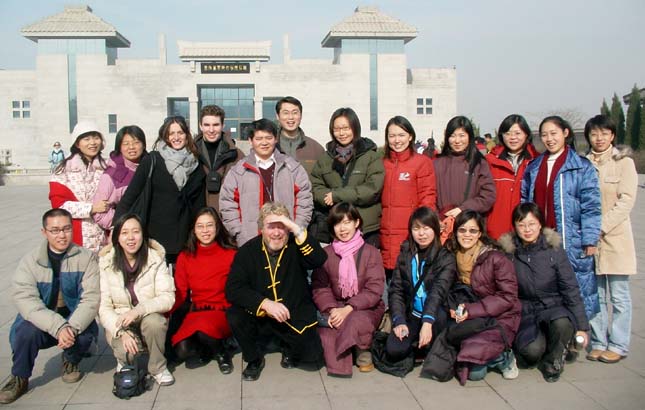
Company trips can be fun, boost morale and increase loyalty. Here are Dezan Shira & Associates Beijing office staff three years ago visiting Xi’an. Eighty percent of them are still with the firm, in an office that has now doubled in size since this photo was taken, due to increased desire to work for the practice as well as our own expansion. In all, we take 85 percent of all staff away on a trip each year amongst 150 employees nationally from nine offices in China.
Further reading
Can your China manager manage?
Common staffing mistakes, and how to avoid them
Common mistakes and perceptions when investing in China
- Previous Article China retail sales jump 20 percent
- Next Article Improving China’s international PR still not on the agenda