<?xml version="1.0" encoding="UTF-8"?><!-- generator="wordpress/2.3.2" -->
<rss version="2.0"
	xmlns:content="http://purl.org/rss/1.0/modules/content/"
	xmlns:dc="http://purl.org/dc/elements/1.1/"
	>
<channel>
	<title>Comments on: Second Edition of Buiness Guide to Setting Up Joint Ventures Now Available</title>
	<link>http://www.china-briefing.com/news/2008/04/16/second-edition-of-buiness-guide-to-setting-up-joint-ventures-now-available.html</link>
	<description></description>
	<pubDate>Fri, 21 Nov 2008 18:35:44 +0000</pubDate>
	<generator>http://wordpress.org/?v=2.3.2</generator>
		<item>
		<title>By: Chris Devonshire-Ellis</title>
		<link>http://www.china-briefing.com/news/2008/04/16/second-edition-of-buiness-guide-to-setting-up-joint-ventures-now-available.html#comment-10296</link>
		<dc:creator>Chris Devonshire-Ellis</dc:creator>
		<pubDate>Wed, 16 Apr 2008 04:28:28 +0000</pubDate>
		<guid>http://www.china-briefing.com/news/2008/04/16/second-edition-of-buiness-guide-to-setting-up-joint-ventures-now-available.html#comment-10296</guid>
		<description>JV's are often mis-understood. They represent the most challenging aspect of investment into China as they are invariably used for the largest investments, either through a legal requirement for a Chinese partner, or a politically desirable need to have one. We've pointed out here before the assets a Chinese partner can bring to the table, and in particular existing supply chains and distribution channels. 

The largest JV we have been involved with was the establishment of Santa Fe (now Devon Energy) Oil Resources of Texas and their JV with CNOOC in Shekou, Shenzhen. That ate up over USD200 million to produce results, however is now over 10 years old and still going strong - and successfully. It was fun and games sometimes to get both parties aligned, particularly in finance and administration issues, taking a few years to evolve a mutually beneficial reporting system, however, we got there. A huge find in the South China Sea in year four also helped matters - there were periods both partners were irritable with each other and seemingly working hard for no reward. But such is life in big ticket industries, and oil &#38; gas in particular. But that JV got through it all, and now is massively profitable. I can point to many other similar examples we have handled over the years.   

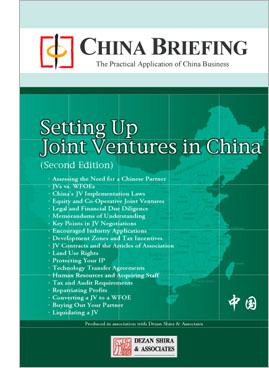
The issues affecting most JV's is the management of them, which can be challenging and complicated. However, there are ways to deal with the Chinese partner, even from a minority position, that puts you in effective control. Both this book, and the forthcoming issue of China Briefing Magazine (see Home button at top) deal with "Managing Your Chinese Joint Venture Partner" - the magazine out in ten days, the book available now. 

Advising on a subsequently successful JV is the crowning achievement of any businessman or lawyers China career, and when constructed and operated well is a thing of beauty. JV's remain a hugely important vehicle for big ticket FDI into China and they can be both very successful and well managed. At China Briefing, and Dezan Shira &#38; Associates, our job is to tell you how.</description>
		<content:encoded><![CDATA[<p>JV&#8217;s are often mis-understood. They represent the most challenging aspect of investment into China as they are invariably used for the largest investments, either through a legal requirement for a Chinese partner, or a politically desirable need to have one. We&#8217;ve pointed out here before the assets a Chinese partner can bring to the table, and in particular existing supply chains and distribution channels. </p>
<p>The largest JV we have been involved with was the establishment of Santa Fe (now Devon Energy) Oil Resources of Texas and their JV with CNOOC in Shekou, Shenzhen. That ate up over USD200 million to produce results, however is now over 10 years old and still going strong - and successfully. It was fun and games sometimes to get both parties aligned, particularly in finance and administration issues, taking a few years to evolve a mutually beneficial reporting system, however, we got there. A huge find in the South China Sea in year four also helped matters - there were periods both partners were irritable with each other and seemingly working hard for no reward. But such is life in big ticket industries, and oil &amp; gas in particular. But that JV got through it all, and now is massively profitable. I can point to many other similar examples we have handled over the years.   </p>
<p>The issues affecting most JV&#8217;s is the management of them, which can be challenging and complicated. However, there are ways to deal with the Chinese partner, even from a minority position, that puts you in effective control. Both this book, and the forthcoming issue of China Briefing Magazine (see Home button at top) deal with &#8220;Managing Your Chinese Joint Venture Partner&#8221; - the magazine out in ten days, the book available now. </p>
<p>Advising on a subsequently successful JV is the crowning achievement of any businessman or lawyers China career, and when constructed and operated well is a thing of beauty. JV&#8217;s remain a hugely important vehicle for big ticket FDI into China and they can be both very successful and well managed. At China Briefing, and Dezan Shira &amp; Associates, our job is to tell you how.</p>
]]></content:encoded>
	</item>
</channel>
</rss>