Written in China and read by professionals
in over 160 countries worldwide


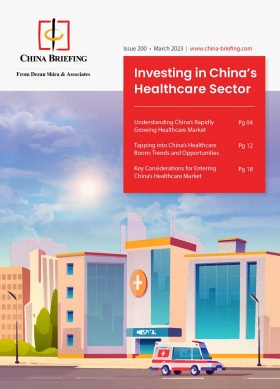
China Briefing is a monthly magazine and daily news service about doing business in China. We cover topics relating to the Chinese economy, the market in China, foreign direct investment and Chinese law and tax. It is written in-house by the foreign investment professionals at Dezan Shira & Associates


Market Indexes

Shanghai

Shenzhen


Beijing Raises Minimum Wage

BEIJING, Jun. 22 – The Beijing municipal government has raised the monthly minimum wage in the city to RMB960, effective from July 1.

The notice, issued June 4, raises the monthly minimum wage to RMB960, up from RMB800, and the hourly minimum wage to RMB5.5, up from RMB4.6.

Furthermore, the notice stipulates that social security fees, housing funds, overtime wages, allowances or subsidies for meals, transportation and housing for working in special work environments, or conditions such as night shifts, high temperatures, or working underground should not be regarded as components of standard minimum wage.

The part-time hourly minimum wage was raised from RMB9.6 to RMB11, during national holidays the minimum hourly wage was increased from RMB22 to RMB25.7.

The notice was implemented in accordance with the “Green Beijing” concept which aims to maintain social stability and promote economic development.

Related Reading
Shenzhen Raises Minimum Wages
Hubei Province Raises Minimum Wages
Shanghai Raises Minimum Wages
Guangdong Province Raises Minimum Wages

This entry was posted in Business, Finance, Tax and Accounting, Legal and Regulatory, Minimum Wages. Bookmark the permalink.

One Response to Beijing Raises Minimum Wage

  1. Chris Devonshire-Ellis says:

    These are wage hikes (against minimum wage) of 20% for permanent workers and 19.56% for hourly rates respectively. That is currently eight and a half times of China’s official inflation rate of 3.1%. There’s no justification for it on an economic basis, especially as China has said it has suffered from a downturn of buying from the US and Europe, so employers volumes and profits are also down. The only reason therefore is the ‘social stability’ aspect – somewhat unique to China as a one-party state – purely to put more money in workers pockets than in businesses to keep them happy. The dividing line between when raises such as these are not enough and Chinese workers start striking and demanding more than factories can afford is going to be an interesting one to assess. It’s going to be a very close call by the Government for social stability over commerce and the demand for profits, and some major corporate casualties must be on the horizon both in China and for foreign investors. It’s the beginning of the work environment getting scary out there. – Chris

Leave a Reply

Your email address will not be published. Required fields are marked *

*

You may use these HTML tags and attributes: <a href="" title=""> <abbr title=""> <acronym title=""> <b> <blockquote cite=""> <cite> <code> <del datetime=""> <em> <i> <q cite=""> <strike> <strong>


Dezan Shira & Associates provide a range of services for companies looking to undertake foreign direct investment into Asia, These include corporate establishment, accounting, tax, payroll, audit and due diligence. To learn more about the firm, please contact one of our specialists at china@dezshira.com, download our corporate brochure or visit at us www.dezshira.com


Dezan Shira & Associates, Twenty years of Excellence

The Asia Briefing Bookstore

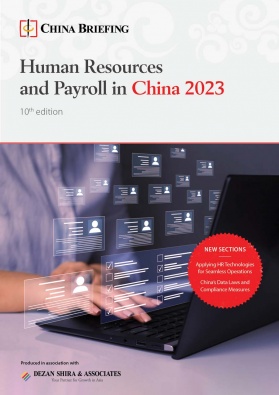
Our best selling legal, financial, tax and regional guides to Asia business, industry reports and more…
Click here to view all titles now

China Briefing Book Store China Briefing Book Store China Briefing Book Store China Briefing Book Store China Briefing Book Store China Briefing Book Store China Briefing Book Store China Briefing Book Store China Briefing Book Store

NOW AVAILABLE IN PDF