New China Briefing Books Out Now

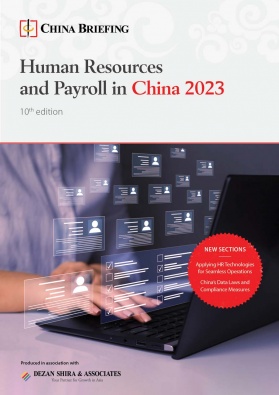
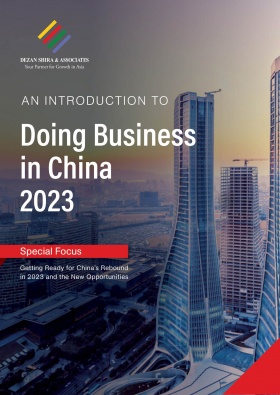
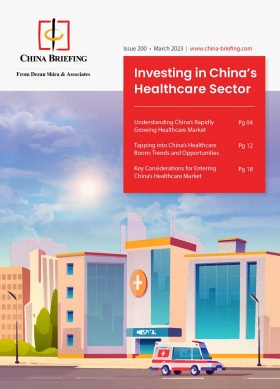
Jan. 22 – China Briefing just released two new titles on doing business in the country; expanding the Asia Briefing roster of invaluable resources for both the new and experienced foreign investor.

Human Resources in China

Due to the rapidly changing nature of the labor market and the laws that govern it in China, it can be very difficult for foreign investors and managers to understand how to manage human resources on the mainland. Produced in association with the human resource professionals at Direct HR, a specialist China recruitment firm, this technical guide is designed to cover the most important issues related to managing a Chinese workforce and details HR issues that both local managers in China and investors looking to establishing an office on the mainland should be aware about.

For more information on our guide to Human Resources in China, including a list of the topics covered, click here. Read the rest of this entry »


Digital TV Switch to Increase Cable Bills

SHANGHAI, Dec. 18 – Cable television service bills will start to increase next year as Shanghai and other provinces eventually switch from analog to digital broadcasting by 2015.

By 2011, monthly cable TV service bills for Shanghai residents will have increased by 77 percent according to the Shanghai Municipal Development and Reform Commission. Read the rest of this entry »


West, Central Regions Recession Proof as Auto Sales Surge

Aug. 20 – China’s Western and Central inland regions have reported a surge in auto sales with growth of 33 percent for the first half year over 2008 figures, according to a report from the global market research firm, Ipsos. The industry average for China this year has been 24 percent.

More than 2.73 million new license plates were issued in China in the first five months of the year, with Shaanxi, Gansu, Ningxia, Heilongjiang, Jiangxi and Sichuan all contributing 35 percent to national growth. Shaanxi reported a growth of 110 percent in issuing license plates, compared to a 12 percent drop in Guangdong.

Read the rest of this entry »


China Briefing Books Now Downloadable in PDF

China Briefing booksJul. 20 – The complete series of China Briefing’s popular legal, tax and regional guides are now available for purchase via PDF downloads here.

Published since 2003 and regularly updated, available titles include guides to the legal procedures and investment implications of establishing Representative Offices, Wholly Foreign Owned Enterprises, Joint Ventures, Mergers & Acquisitions, Intellectual Property Rights, Transfer Pricing and the China Tax Guide.

The complete, five volume series of China’s Regional Investment Guides are also included covering China’s regions with details of investment zones and incentives, local demographics and industry facts and figures.

Read the rest of this entry »


China’s FDI Plateaus as Investment Demographics Shift

By Chris Devonshire-Ellis

SHANGHAI, Jul. 17 – China’s foreign direct investment and the nature of its GDP growth are showing signals of permanent change as the world gradually lifts itself out of the global recession. Dezan Shira & Associates has just released its half year figures and they make for interesting reading in terms of the analysis they present of the nature of doing business in China.

With more than 2,500 multinational clients in the country, we are able to produce a snapshot of what is going on and where. Let’s have a look at some of the behavioral traits.

Foreign Direct Investment

Across the board, FDI into China based on the number of clients we have investing in the country fell by 10 percent. There’s no real surprise there given the lack of investment dollars floating around this year, and this is in line with our budget predictions that we carried out at the back end of 2008.

Read the rest of this entry »


High-Speed Trains Cut Travel Time to Central China and YRD

Mar. 25 – Two new high-speed railways will slash travel time to Central China and the Yangtze River Delta when they begin operations on April 1.

The two new railways are the Hefei-Wuhan passenger railway and the Shijiazhuang-Taiyuan railway that connects the north and the west. A journey from Wuhan to Shanghai will be cut in half to four hours and 45 minutes while Wuhan to Nanjing will can be made in less than three hours.

The travel time between the capital cities of Hebei and Shanxi provinces will be whittled down to one hour from the previous five hours. On the other hand, a journey from Taiyuan and Beijing will only take three hours, a saving of more than five hours.

Read the rest of this entry »


China’s Postal Savings Bank to Play Key Role in Spreading Rural Wealth

postal-savingsFeb. 26 – China’s Postal Savings Bank, a relatively obscure yet powerful entity formed in 2007, will be the main infrastructure driver for getting income into rural areas under the country’s economic stimulus plan.

The bank, which was initially capitalized at RMB20 billion, was formed following a restructuring of the State Post Bureau, and consequently possesses some 37,000 branches nationally thanks to its link with China’s postal service. It is now the country’s second largest lender in terms of outlets after the Agricultural Bank of China. In terms of deposits, the bank  holds over RMB1.5billion, making it the fifth biggest in assets. Read the rest of this entry »


China’s Northern and Inland Provinces Recession Free

Streets of Harbin / ASIA BRIEFING LTD

Central Avenue, Harbin’s pedestrianized shopping center, is booming with many international and Chinese luxury brands and boutiques lining both sides of this historic street

By Chris Devonshire-Ellis and Andy Scott

Jan. 3 – China Briefing and Dezan Shira & Associates staff have spent much of the past few days during the holiday season traveling around China, and especially the inland and Northern provinces, assessing the impact in these secondary locations of the global financial crisis on the local economies.

Still largely disconnected from the international foibles of trade and commerce, the inland and northern provinces of China depend much more on China trade and trade with other markets, such as Russia and Central Asia, that are also themselves largely isolated from the global markets. These areas then, with huge populations and massive territories, represent for China and much of emerging Asia the last bastion of isolationism and protection from the oft rapacious demands of the global economy. As Karl Marx’s “Das Kapital” once again hits the best seller lists in its treatise of the fundamental flaws of capitalism, it is these, largely agrarian and proletarian economies that appear both resilient and dependable in times of international economic strife. Marx would recognize the trends.

Read the rest of this entry »


Wuhan’s Time Has Come – City Business Overview

wuhan-1114.jpg

Nov. 14 – Wuhan, the central Chinese inland capital city of Hubei province, has been generating interest recently as a major recipient of much of China’s stimulus package and also as an increasingly attractive recipient of foreign investment looking to sell further onto the domestic market. It is the seventh largest city in the country and is strategically placed as a logistics center in central China. Its position on the Yangtze River, with capabilities of handling 40 million tons of cargo annually also makes it attractive as it’s possible to manufacture here and ship downriver to primary markets such as Shanghai.

Certainly, the infrastructure already in place is impressive. Wuhan’s airport, China’s fourth largest, handles 120 flights a day, including to international destinations across Asia such as Japan, Korea, Thailand, Singapore and Hong Kong. Its second terminal has just been completed, giving it a capacity of a further 160 routes and annual cargo handling capacity of 320,000 tons when it becomes fully operational in the next two months. Read the rest of this entry »


Manzhouli: China’s Largest Inland Port of Entry

manzhouli-freight2.jpgOct. 7 – Although its name is obscure, Manzhouli is an important gateway for business in Inner Mongolia and receives 60 percent of all of China’s trade to and from Russia and the rest of Eastern Europe.

It is the country’s largest inland port of entry.

Manzhouli borders the Russian city of Zabaykalsk with a free trade zone that allows residents from both sides to cross visa free.

Many Russian citizens have actually purchased property and live on the Chinese side because houses are cheaper and considered to be better made.

The combined population of the two cities is about 400,000, with 250,000 of them living on the Chinese side. Manzhouli, while small in terms of population, is an important gateway to Russia and is fast developing as a trading city.

Read the rest of this entry »