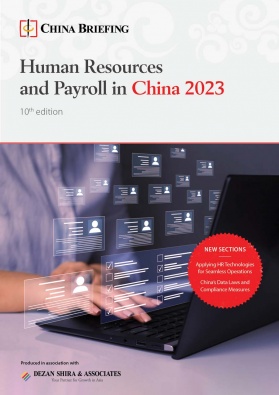
Other Briefings
China Monthly Tax Brief: January 2026
January 2026 brought a heavy wave of tax and fiscal updates in China. The most consequential development is the release of multiple supporting rules for the value-added tax (VAT) Law and its Implementation Regulations, which reshape domestic VAT administration, invoicing logic, deduction rules, prepayment requirements, and export refund procedures.
Other notable developments include the national unification of land value-added tax (LVAT) administration, the phase-out of export VAT refunds for certain photovoltaic (PV) and battery products, new import tax incentives for the Hetao Shenzhen-Hong Kong Cooperation Zone, and the extension of several preferential policies affecting financial markets, housing transactions, and community services.
VAT Law implementation: key supporting rules released
On January 30, 2026, China released a package of supporting documents to operationalize the VAT Law and its Implementation Regulations. The package includes rules on VAT taxpayer status, incentive catalogues, input VAT deduction, VAT prepayment, and export VAT refund administration.
This is not a marginal policy update. The VAT Law is consolidating China’s VAT framework into a clearer, more standardized system, and the supporting documents directly affect how companies handle VAT registration, invoicing, input VAT deduction, VAT prepayment, and export refund compliance.
Foreign-invested enterprises (FIE) should prioritize a 2026 VAT compliance review, particularly in areas with high historical variation across local tax bureaus.
| VAT Law Supporting Documents at a Glance | ||
| Document | Role in the VAT system | Core message for businesses |
| STA Announcement [2026] No. 2 | VAT identity rulebook | Clarifies general VAT taxpayer registration; removes the former “guidance period”. |
| Caishui [2026] No. 9 | Tax base definition | Defines taxable transactions and clarifies the scope under the goods and services subject to 9 percent VAT rate categories |
| Caishui [2026] No. 10 | Incentives consolidation | Integrates VAT incentives (threshold, exemptions, simplified taxation, special deductions) and sets validity periods. |
| STA Announcement [2026] No. 4 | Domestic administration | Implementation rules supporting Caishui [2026] No. 10. |
| Caishui [2026] No. 12 | Output VAT calculation | Sets rules for “net-of-cost” VAT calculation for eight common business scenarios. |
| Caishui [2026] No. 13 | Input VAT & special transactions | Clarifies input VAT deduction documents, asset restructuring VAT rules, mixed sales, and VAT liability timing. |
| Caishui [2026] No. 14 | VAT prepayment rules | Standardizes VAT prepayment for cross-region construction, real estate pre-sales, and out-of-town property transfers. |
| Caishui [2026] No. 15 | Long-term asset input VAT | Introduces multi-year input VAT adjustment for mixed-use long-term assets above RMB 5 million. |
| Caishui [2026] No. 11 | Export VAT & consumption tax | Rebuilds the export VAT/consumption tax framework and introduces a 36-month compliance window. |
| STA Announcement [2026] No. 5 | Export refund administration | Operational procedures for export refund filing, review, collection of FX settlement materials, and risk classification. |
Below is a brief overview of the relevant VAT policies. We will publish more in‑depth analysis on key topics in the coming weeks—subscribe to remain up to date.
VAT taxpayer status: general taxpayer registration clarified
STA Announcement [2026] No. 2 clarifies the general VAT taxpayer registration regime and formally removes the previous “guidance period” mechanism.
Key points for businesses include:
- General taxpayer registration becomes mandatory once annual taxable sales exceed the threshold;
- Certain industries remain mandatory general taxpayers regardless of sales size (for example, specific state grain enterprises, gas stations, and consolidated-payment airlines);
- Rolling sales measurement is clarified (up to 12 months or four quarters);
- Occasional sales of intangible assets and real estate transfers are excluded from the annual sales threshold;
- Historical prepaid VAT balances linked to invoice quota adjustments may be offset or refunded; and
- The former general taxpayer “guidance period” is abolished.
This reduces administrative discretion and increases predictability. It also raises the risk of automatic enforcement if a company’s sales pattern triggers mandatory general taxpayer status.
VAT incentives: consolidated catalogue with defined validity periods
Caishui [2026] No. 10 consolidates VAT incentives into a structured system, separating long-term incentives from temporary incentives, and defining validity periods for many preferential items.
Key points for businesses:
- The small-scale taxpayer VAT exemption threshold is set at:
- RMB 100,000 (US$13,800) for monthly filing; and
- RMB 300,000 (US$41,400) for quarterly filing.
- Many VAT exemptions and simplified taxation items are extended but expire at the end of 2027;
- Rules for natural persons are more detailed, including scenarios involving platform-based income and reverse invoicing.
The incentive system becomes easier to interpret but more time-bound. Companies relying on preferential VAT treatment should track expiry risk and assess whether business models remain viable under standard VAT rules after 2027.
Simplified VAT taxation: applicable items and levy rates
Caishui [2026] No. 10 also consolidates transactions eligible for the simplified VAT taxation method and extends many preferential levy-rate arrangements through December 31, 2027.
The simplified taxation method at 3 percent applies to a range of goods and services during the period between January 1, 2026 and December 31, 2027, including:
- sales of self-extracted sand, soil, and stone materials;
- sales of self-generated electricity;
- sales of tap water;
- consignment sales by consignment stores;
- public transportation services;
- qualifying construction services;
- qualifying financial services;
- qualifying cultural, sports, and lifestyle services; and
- sales of anti-cancer and rare-disease drugs.
The simplified taxation method at 5 percent applies mainly to legacy real estate and infrastructure-related transactions during the period between January 1, 2026 to December 31, 2027, including:
- leasing or selling real estate acquired before April 30, 2016, and related financial leasing services;
- “old project” real estate developments;
- transfer of land use rights acquired before April 30, 2016; and
- toll collection for primary and secondary highways, bridges, and sluices that commenced construction before April 30, 2016.
Caishui [2026] No. 10 also retains multiple reduced levy arrangements. Key items include:
- sales of second-hand goods and used fixed assets: 3 percent levy reduced to 2 percent;
- individuals leasing residential property: 3 percent levy reduced to 1.5 percent;
- housing leasing enterprises leasing residential property to individuals: 5 percent levy reduced to 1.5 percent;
- small-scale taxpayers’ taxable transactions (excluding real estate leasing and transfers): 3 percent levy reduced to 1 percent (Jan 1, 2026 to Dec 31, 2027); and
- second-hand vehicle dealers selling purchased second-hand vehicles: 0.5 percent levy rate (Jan 1, 2026 to Dec 31, 2027).
Simplified taxation remains an important compliance and pricing tool for businesses in construction, transportation, real estate, leasing, and consumer resale. However, many of the policies are explicitly time-limited to end-2027, meaning companies relying on simplified taxation should monitor renewal risk and assess whether contracts and pricing models remain viable under standard VAT rules after the expiry date.
VAT calculation: “net-of-cost” taxation clarified for key industries
Caishui [2026] No. 12 clarifies how VAT can be calculated on a net margin basis in eight common business scenarios.
Net-of-cost VAT calculation is clarified for scenarios including:
- financial product transfers;
- financing lease transactions;
- brokerage and agency services;
- tourism services;
- labor dispatch and human resource outsourcing;
- construction subcontracting; and
- real estate and property-related transactions.
In many cases, deductible costs used in the net calculation cannot generate deductible input VAT. This impacts both VAT payable and input VAT strategy, particularly for service platforms, leasing companies, labor outsourcing firms, and travel-related businesses.
It is also worth noting that other net-of-cost preferential treatments listed in STA Announcement [2026] No. 10 are currently scheduled to remain in effect only until December 31, 2027. Companies should closely monitor whether these time-limited policies will be extended and assess potential business and pricing impacts in advance.
Input VAT deduction and special transactions: rules refined
Caishui [2026] No. 13 refines rules for input VAT deduction documents and clarifies VAT treatment for several special transactions.
Key points for businesses:
- Clearer deduction documentation for vehicles, passenger transport, and toll fees;
- Clarification of VAT treatment for qualifying asset restructuring;
- More detailed guidance on mixed sales; and
- Clarification of VAT liability timing for selected industries and payment models.
These areas are among the most common VAT audit triggers. The clarifications will likely lead to more standardized enforcement across regions.
Mixed-use long-term assets: multi-year input VAT adjustment introduced
Caishui [2026] No. 15 introduces a multi-year input VAT adjustment mechanism for mixed-use long-term assets with an original value above RMB 5 million (approx. US$690,000).
Key points for businesses:
- Applies to certain long-term assets (for example, buildings, land use rights, aircraft);
- Excludes leased assets and real estate inventory;
- Requires input VAT to be adjusted over five to 20 years, depending on asset type; and
- Requires dedicated tracking ledgers.
This creates an ongoing compliance obligation for companies with large campuses, industrial facilities, and mixed-use premises, particularly in manufacturing and R&D-heavy sectors.
VAT prepayment: standardized rules for cross-region and real estate scenarios
Caishui [2026] No. 14 standardizes VAT prepayment rules for key cross-region service and real estate transactions.
Covered areas include:
- cross-region construction services;
- construction services involving advance payments;
- real estate pre-sales;
- transfer or leasing of out-of-town real estate; and
- cross-province oil and gas field services.
VAT prepayment affects cash flow and project settlement. Companies operating across multiple provinces should revisit contract structures, project accounting, and VAT filing arrangements.
Export VAT refunds: rebuilt framework and 36-month documentation window
Caishui [2026] No. 11 and STA Announcement [2026] No. 5 have rebuilt the export VAT and consumption tax refund framework, and the filing and documentation rules have been updated.
Key points for businesses:
- Export VAT treatment is reorganized into three tracks:
- refund/exemption;
- exemption-only; and
- taxation (no refund);
- Companies may now submit certain supporting documents and FX settlement materials within 36 months from the export date;
- If the deadline is missed, the export may be treated as domestic sales for VAT purposes; and
- Export refund administration moves toward digital filing, risk classification, and differentiated review.
Exporters gain flexibility on documentation timing but face higher compliance expectations through digital and risk-based administration, including greater traceability of upstream suppliers.
LVAT: national unification of administration rules
On Jan 1, 2026, the STA issued STA Announcement [2026] No. 3 to unify nationwide LVAT administration standards and improve policy certainty. The announcement provides clearer rules on LVAT prepayment filing, tax base calculation, deductible items, clearance procedures, and the treatment of post-clearance “tail inventory” sales.
LVAT prepayment: filing timing and cycle standardized
The announcement confirms that LVAT prepayment begins at the earlier of the date the pre-sale permit is issued or the date the first revenue is received. Prepayment ends at the end of the prepayment period immediately preceding the tax authority’s acceptance of the clearance filing. Filing may be monthly or quarterly, as determined uniformly by the provincial tax authority.
Tax base and deductible items clarified
For LVAT prepayment, the tax base is calculated as: prepayment amount ÷ (1 + VAT rate/levy rate), replacing the previous formula that deducted VAT prepayment from advance receipts. The announcement also expands clarity on deductible items, including certain public facility construction costs not stipulated in the land grant contract, stamp duty paid on real estate transfers, and local education surcharge paid on real estate transfers.
Clearance and tail inventory sales
The announcement standardizes how sales are treated after a clearance filing is submitted. Transfers occurring between the end of the last prepayment period and the issuance of the clearance review conclusion must be declared in the first filing period after the conclusion is issued, using the tail inventory sales approach. For sales occurring after the clearance review conclusion, taxpayers must file LVAT on a quarterly basis as tail inventory sales. The rules also clarify that the per-square-meter deductible amount used for tail inventory calculations should exclude taxes related to clearance, with tail inventory taxes deducted based on actual amounts.
Transition rules and repeal of legacy approaches
Projects for which a clearance acceptance notice has not been issued before January 1, 2026 are subject to the new rules, while projects that already received a clearance acceptance notice continue under prior rules. The announcement also abolishes two commonly used legacy approaches: the simplified per-square-meter cost method previously referenced in Guoshuifa [2006] No. 187 for post-clearance sales, and the advance receipt-based prepayment tax base formula in STA Announcement [2016] No. 70.
Why it matters
The new LVAT rules reduce local discretion and tighten standardized filing and calculation practices nationwide. Real estate developers and companies disposing of property assets should reassess LVAT cash-flow planning, deductible item documentation, and tail inventory sales calculations, particularly where projects historically relied on simplified cost allocation methods.
Photovoltaic and battery product export tax rebate adjustments
On January 8, 2026, the MOF and the STA jointly issued MOF STA Announcement [2026] No. 2, introducing a phased adjustment and eventual cancellation of VAT export rebates for photovoltaic (PV) and battery products. The key changes are as follows:
| Product category | Effective period | VAT export rebate adjustment | Key notes |
| Photovoltaic products | From April 1, 2026 | Rebate cancelled | From this date, exports of PV products will no longer enjoy VAT export rebates. |
| Battery products | April 1 – December 31, 2026 | Rebate rate reduced from 9% to 6% | Transitional period; first reduction of the rebate rate. |
| Battery products | From January 1, 2027 | Rebate cancelled | Post-transition, VAT export rebates for batteries will be fully eliminated. |
The announcement applies only to products listed in the attachment. For products subject to consumption tax, the existing export tax refund or exemption policy remains unchanged.
The applicable export rebate rate is determined based on the export date indicated on the customs declaration.
Practical guidance for businesses
Enterprises should review the attached product list to determine whether their exports fall within the adjustment scope. For in-transit or already contracted orders, companies are advised to coordinate with customers and supply chain partners and plan exports strategically before March 31, 2026, to optimize eligibility for existing rebate rates.
Tax policies for imports and exports in Hetao, Shenzhen
On January 9, 2026, the MOF, STA, and the General Administration of Customs jointly issued Cai Guan Shui [2026] No. 1, introducing special tax incentives to support the construction of the Hetao Shenzhen-Hong Kong Science and Technology Innovation Cooperation Zone (“Hetao Zone”). The policy provides import tax exemptions for specified research and development (R&D) goods and establishes a “one-line open, two-line controlled” regulatory framework.
Import tax exemptions for self-used R&D goods
- Eligible entities: Zone-registered enterprises, research institutions, and private non-enterprise science and technology organizations listed on the Shenzhen municipal government’s “white list”.
- Exemption scope: Eligible entities importing self-used R&D goods from Hong Kong via the zone (“one-line”) under the Exempt R&D Goods List are exempt from import duties, import VAT, and consumption tax.
- Exceptions: Goods prohibited for import, explicitly excluded from exemption, or listed in the Major Imported Equipment and Products Not Eligible for Tax Exemption Catalogue are not eligible.
Regulatory framework: “one-line open, two-line controlled”
| Flow direction | Tax and regulatory requirements |
| One-line (Hetao ↔ Hong Kong) | Imports meeting conditions are tax-exempt (voluntary payment allowed). Exports of dutiable goods follow standard export duty rules. |
| Two-line (Hetao ↔ Mainland China) | Tax-exempt R&D goods or derived products entering the mainland must pay applicable import taxes (except taxes already paid in the park or on one-line imports). |
| In-zone circulation | Generally treated as two-line imports; import taxes must be paid when goods circulate between eligible entities unless exempted due to bankruptcy, deregistration, or transfer within eligible entities. |
Management and compliance highlights
- Supervision: Customs electronic ledger system for information-based management; consumables and animals may be released from supervision upon use.
- Voluntary taxation: Eligible entities may voluntarily pay import taxes, but once their exempt status is waived, they cannot reapply for exemption on the same goods within 36 months.
- Local responsibilities: The Shenzhen municipal government sets whitelist criteria, R&D recognition, and violation handling rules.
- Monitoring: Fiscal, customs, and tax authorities supervise to prevent abuse.
- Violations: Tax evasion may constitute smuggling or a violation; criminal liability applies where relevant.
Practical guidance for businesses
- Qualification check: Confirm eligibility as a white-listed entity and follow the Shenzhen government’s application procedures.
- Customs clearance: Verify import goods against the Exempt R&D Goods List; ensure goods are self-used for R&D purposes.
- Compliance management: Maintain detailed internal records to track usage, consumption, and circulation of tax-exempt goods per customs electronic ledger requirements.
- Cost assessment: For R&D products entering the mainland or circulating in the park, calculate potential tax liabilities and assess the overall impact of the four-category measures.
For businesses in the Heitao Shenzhen Park, it is critical to first confirm eligibility as a white-listed entity and follow the Shenzhen government application procedures to secure tax-exempt status. Companies should carefully align imported goods with the Exempt R&D Goods List and ensure they are used exclusively for R&D purposes to maximize tax benefits. Maintaining detailed internal records is essential for tracking usage, consumption, and circulation in compliance with customs electronic ledger requirements, reducing audit risk. Businesses should also proactively assess potential tax liabilities and the financial impact of four-category measures for R&D products entering the mainland or circulating within the park, enabling strategic planning and cost optimization.
Continuation of financial market tax incentives
In January 2026, the MOF, STA, and relevant authorities issued a series of announcements extending key tax incentives in China’s financial markets. These measures, effective through December 31, 2027, aim to support market openness, attract long-term capital, and encourage investment in innovative enterprises.
Key policy continuations:
- Foreign institutions investing in domestic bonds (MoF STA Announcement 2026 No. 5): Interest income earned by foreign investors in China’s domestic bonds remains temporarily exempt from corporate income tax and VAT, except for interest linked to onshore establishments of the investor.
- Foreign institutions investing in offshore local government bonds (MoF STA Announcement 2026 No. 6): Interest income from China-issued bonds abroad continues to enjoy VAT exemption.
- Innovative enterprise CDRs (MoF, STA & CSRC Announcement 2026 No. 8): Tax exemptions and preferential treatment for capital gains and dividends on domestic CDRs are extended for individual and institutional investors, maintaining stability for the pilot program and encouraging broader participation in innovation-driven investment.
These extensions reduce tax costs and complexity for international and domestic investors, stabilize market expectations, and facilitate continued capital inflows into China’s debt and equity markets, supporting the country’s innovation-driven growth strategy.
Continuation of tax incentives for community and household services
On January 15, 2026, the Ministry of Finance, the State Taxation Administration, and four other ministries jointly issued Announcement No. 7 of 2026, extending tax and fee incentives for community and household services—including elderly care, childcare, and domestic services—through December 31, 2027. The measures aim to reduce operating costs and market entry burdens for service providers.
Core incentives:
- Revenue relief: Income from eligible community services is exempt from VAT; corporate income tax is calculated on 90% of such income.
- Asset relief: Properties and land used for community services are exempt from deed tax, property tax, and urban land use tax.
- Start-up relief: Related administrative fees, such as property registration, urban infrastructure, and civil defense construction fees, are waived.
The announcement clearly defines eligible services and provider types. Service providers must retain records such as registration receipts and service agreements. Domestic service enterprises meeting specific conditions, such as signing tripartite agreements and training staff, also benefit from VAT exemptions on household service income.
These incentives support the sustainable growth of community and household services while reducing operational and regulatory costs.
Other updates
Tax service credit rating framework
On January 1, 2026, the STA issued the Administrative Measures for Credit Evaluation of Tax-Related Professional Services, establishing a nationwide “credit points–rating–differentiated supervision” system for tax and accounting firms. Firms are rated TSC1–TSC5, with high-credit institutions benefiting from priority services and low-credit or non-compliant entities facing stricter oversight. Businesses should check service providers’ credit ratings when selecting advisors.
Shenzhen individual income tax subsidy guidance
On January 4, 2026, Shenzhen released instructions for claiming 2025 individual income tax subsidies for qualified foreign high-end and scarce talent. Eligible taxpayers can apply for subsidies on tax paid exceeding 15 percent, up to RMB 5 million (US$690,000), with the subsidy exempt from personal income tax. Applications run from January 1 to March 31, 2026, under an online credit-commitment system, and subsidies cannot be combined with other local talent programs. Read more here.
Residential home replacement tax relief
On January 12, 2026, the MOF, STA, and Ministry of Housing and Urban-Rural Development issued Announcement No. 3 of 2026, extending individual income tax refunds for homeowners who sell and repurchase a property in the same city within one year, through December 31, 2027. Refund amounts depend on the ratio of new to old property values, with full refunds available if the new purchase equals or exceeds the old property value.
National major water projects fund
On January 12, 2026, the MOF issued Notification No. 6 of 2026, extending the collection of the national major water projects construction fund through December 31, 2030, with rates maintained at the reduced 50 percent level established in 2019.
Environmental performance-linked tax measures
On January 13, 2026, the Ministry of Ecology and Environment, the People’s Bank of China, and STA issued guidance linking environmental performance grades (A–D) to tax incentives, capacity allocation, energy costs, and financing support, providing direct financial implications for businesses in key industries.
Reminder on undeclared foreign income
The STA also reminded individuals to self-review 2022–2024 foreign-sourced income. Failure to report or underreporting may trigger tax recovery, interest, and penalties within three years, with potential criminal liability for deliberate evasion. Read more here.
Our tax advisory teams include experienced tax accountants, lawyers, and former tax officials who deliver deep insight into Asia’s tax environments—providing clients with comprehensive advisory and compliance support tailored to regional requirements. To arrange a consultation, please contact China@dezshira.com.
About Us
China Briefing is one of five regional Asia Briefing publications. It is supported by Dezan Shira & Associates, a pan-Asia, multi-disciplinary professional services firm that assists foreign investors throughout Asia, including through offices in Beijing, Tianjin, Dalian, Qingdao, Shanghai, Hangzhou, Ningbo, Suzhou, Guangzhou, Haikou, Zhongshan, Shenzhen, and Hong Kong in China. Dezan Shira & Associates also maintains offices or has alliance partners assisting foreign investors in Vietnam, Indonesia, Singapore, India, Malaysia, Mongolia, Dubai (UAE), Japan, South Korea, Nepal, The Philippines, Sri Lanka, Thailand, Italy, Germany, Bangladesh, Australia, United States, and United Kingdom and Ireland.
For a complimentary subscription to China Briefing’s content products, please click here. For support with establishing a business in China or for assistance in analyzing and entering markets, please contact the firm at china@dezshira.com or visit our website at www.dezshira.com.
- Previous Article Hengqin’s 15% Preferential IIT Policy Extended to 2027
- Next Article Hong Kong’s Evolving Double Tax Agreement (DTA) Network 2026