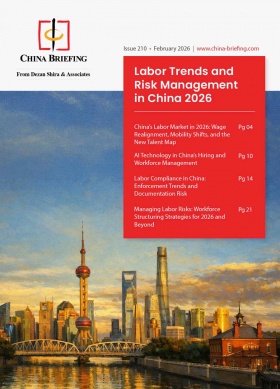
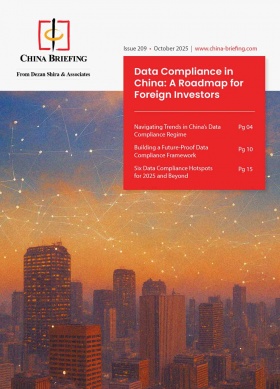
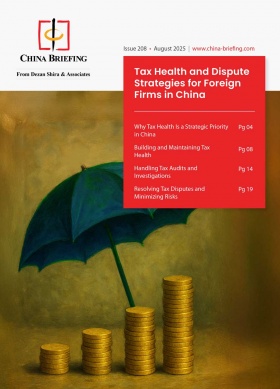
Other Briefings
China Monthly Tax Brief: March 2026
In this China Monthly Tax Brief for March 2026, we cover a busy month of regulatory activity across China’s tax and customs landscape. Key highlights include Shanghai’s sweeping new industry-specific tax incentive guidance under the “2366” framework, a six-measure national campaign to crack down on irregular investment-attraction tax arrangements, expanded lottery invoice pilots, simplified customs re-examination procedures for high-credit AEO enterprises, and new headquarters economy support policies in Qianhai and Beijing’s bonded zones.
March 2026 was a notably active month for tax and customs policymaking in China, with regulatory developments at both the national and local levels carrying direct compliance, planning, and risk‑management implications for foreign‑invested enterprises (FIEs). Against a backdrop of heightened fiscal discipline, strengthened tax administration, and continued efforts to guide investment toward priority industries and regions, authorities released a series of measures that warrant close attention from multinational companies operating or investing in China.

This month’s China Monthly Tax Brief focuses on policy initiatives that reshape how incentives are accessed, administered, and monitored, while simultaneously offering streamlined procedures for compliant enterprises and targeted support for strategically important business models. Key themes include the consolidation and standardization of local tax incentive guidance, a nationwide push to curb irregular investment‑attraction tax arrangements, intensified scrutiny of invoicing practices alongside procedural reforms for trusted customs operators, and renewed regional competition through headquarters‑focused and bonded‑zone development policies.
Taken together, these developments indicate greater transparency and discipline in tax and fiscal administration, paired with selective facilitation for enterprises that meet compliance, substance, and strategic alignment requirements. FIEs should assess both the risks, particularly where historical preferential arrangements or invoicing practices are concerned, and the opportunities arising from clearer incentive frameworks and simplified administrative procedures.
The following sections summarize the most consequential tax and customs updates from March 2026 and outline their practical implications for FIEs operating in China.
Shanghai’s “2366” industry tax incentive guidance
The Shanghai Municipal Tax Service has published the “2366” Industry Tax Incentive Policy Guide, consolidating 43 preferential measures across four industry tiers into a single reference document. The “2366” label refers to the two foundational industries, three pioneer industries, and six key/future sectors targeted under Shanghai’s 15th Five-Year Plan. The table below summarizes the incentives by tier.
| Industry Category | Sector | Key Policies |
| Two foundational industries | Advanced manufacturing | VAT:
• 5% additional input VAT credit against VAT payable (through end‑2027) |
| CIT • 15% preferential EIT rate for High and New Technology Enterprises (HNTEs) • Newly established HNTEs in Shanghai Pudong: “two‑year exemption + three‑year 50% reduction” • 100% super‑deduction for R&D expenses • Loss carryforward extended to 10 years • Accelerated depreciation for fixed assets • Immediate pre‑tax deduction for equipment and instruments costing ≤ RMB 5 million |
||
| Modern services | VAT: • Software products: VAT refunded for the portion exceeding a 3% effective tax burden • Technology service enterprises eligible for VAT excess credit refunds |
|
| CIT:
• IC design and software enterprises: “two‑year exemption + three‑year 50% reduction” |
||
| Special & other tax incentives:
• Full VAT refund for R&D institutions purchasing domestically manufactured equipment |
||
| Three pioneer industries | Integrated circuits (IC), AI, biomedicine, civil aviation | VAT:
• Integrated circuit enterprises: 15% additional input VAT credit |
| CIT:
• Key enterprises in the Lingang New Area: 15% EIT rate for five years from establishment |
||
| Special & other tax incentives:
• Anti‑cancer and rare‑disease drugs may apply a 3% simplified VAT levy |
||
| Six key & future industries | Industrial machine tools, civil aviation, NEVs, animation, etc. | VAT:
• VAT exemption on technology transfer, technology development, and related services |
| CIT:
• HNTEs eligible for 15% EIT rate |
||
| Special & other tax incentives:
• Industrial machine‑tool enterprises: 15% additional VAT credit and 120% R&D super‑deduction |
Why it matters to FIEs
The guide provides a one-stop map of available incentives rather than requiring enterprises to locate each policy independently. Because qualification criteria, such as HNTE status or Lingang residency, are often interconnected, FIEs should conduct a structured eligibility review against all four tiers.
Action items for business
- Confirm preferential enterprise status: Verify whether the enterprise currently holds valid HNTE, TASE, or IC enterprise qualifications ahead of the annual CIT filing season, and ensure supporting documentation remains complete and up to date.
- Assess eligibility for start‑up CIT incentives: Determine whether Pudong‑ or Lingang‑registered entities qualify for applicable start‑up CIT regimes, and confirm that establishment dates and substantive operations are properly documented.
- Strengthen R&D expense tracking: Review internal R&D cost identification and accounting practices to ensure eligibility for the 100 percent or 120 percent super‑deduction, with particular attention to expense classification, project documentation, and cross‑department coordination.
- Evaluate VAT and depreciation benefits for manufacturers: Manufacturing enterprises should assess their application of the five percent additional input VAT credit and accelerated depreciation policies, which generally do not require separate filings but depend on accurate bookkeeping, correct tax treatment, and consistent financial records.
Six measures targeting irregular investment-attraction tax arrangements
On March 2, 2026, the State Taxation Administration (STA) released a summary of the outcomes of its Six Measures on Addressing Tax‑Related Irregularities in Investment Promotion to Support the Development of a Unified National Market. The publication systematically reviews the tax authorities’ work in 2025 to standardize local investment‑attraction practices, safeguard fair competition, and enhance cross‑regional tax services.
The initiative is intended to advance the implementation of the unified national market framework by curbing non‑compliant local subsidy arrangements, strengthening information‑reporting mechanisms, and facilitating the orderly cross‑regional mobility of enterprises and production factors.
Outlined below are the key components of the six measures and their practical implications for enterprises, particularly those operating across regions or relying on preferential fiscal arrangements.
| Measure | Implications for FIEs |
| 1. Special clean-up of irregular investment-attraction tax arrangements | Contractual clauses offering non-standard local tax benefits are being reviewed and unwound. FIEs should audit existing investment agreements and assess exposure to policy reversals. |
| 2. Platform enterprise tax information reporting | Stricter reporting standards for platform operators and merchants. Inflated transaction volumes and fictitious invoicing through shell platforms are being targeted. Legitimate operators benefit from a fairer competitive environment. |
| 3. Cross-regional tax service reform | Lower costs and faster processing for FIEs managing filings across multiple jurisdictions. Remote virtual service windows and cross-provincial self-service channels are now available. |
| 4. Restricting irregular fiscal rebates tied to securities transactions | For listed companies, restricted-share transfers, and CIT withholding are now standardized to the location of the listed company. Prior schemes involving account transfers to favorable jurisdictions have been closed. |
| 5. Curbing “policy-low-ground” tax-source shifting | Enterprises registered in preferential zones must demonstrate substantive operations (personnel, accounts, assets) at that location. FIEs with nominal registered addresses in preferential zones but operations elsewhere face potential denial of incentives. |
| 6. Standardizing policy interpretation and execution | Enforcement standards are converging nationally. FIEs can expect more consistent treatment across regions and should reference the STA’s official Q&A database for authoritative policy guidance. |
Why it matters to FIEs
FIEs that have historically benefited from local fiscal rebates, tax holidays negotiated directly with local governments, or preferential treatment tied to registered-address arrangements should treat this campaign as a serious compliance signal. STA’s emphasis on substantive operations requirements (Measure 5) is particularly significant: Arrangements where an FIE’s registered entity in a preferential zone lacks genuine operational substance are now squarely in scope.
Action items for business
- Review local investment arrangements: Conduct a comprehensive review of all investment agreements, side letters, and supplemental arrangements entered into with local governments to identify any commitments involving tax benefits or fiscal subsidies granted outside statutory or approved policy frameworks.
- Reassess substance compliance in preferential zones: Evaluate whether entities registered in preferential zones meet economic substance requirements, including adequate personnel on payroll, genuine business assets, and locally maintained accounting and tax records.
- Verify withholding compliance for equity incentive plans: For corporate groups operating listed‑company restricted share or equity incentive plans, confirm that individual income tax withholding and reporting obligations are being fulfilled in the correct jurisdiction in accordance with source‑of‑income and taxpayer location rules.
- Track authoritative interpretive guidance: Regularly monitor the STA’s official “Immediate Q&A” database and related guidance channels for updated interpretations affecting cross‑regional operations, tax administration coordination, and compliance positioning.
Lottery invoice pilot: expansion and compliance risks
In 2026, the Ministry of Finance (MOF), the Ministry of Commerce (MOFCOM), and the STA launched a six-month lottery invoice pilot across 50 cities at the start of 2026 to stimulate consumer spending. By Mar 12, 2026, cumulative prize disbursements had reached RMB 1.85 billion, with 230 million consumer participations recorded. As pilot volume scaled, authorities identified three non-compliant invoicing behaviors now subject to heightened monitoring and enforcement:
- Fictitious invoicing: issuing invoices for transactions that did not occur, or that misrepresent actual amounts.
- Unreasonable splitting or combining: artificially breaking up or bundling transaction amounts to increase the number of invoices issued and thereby improve lottery odds.
- Irregular red-letter (credit) invoice abuse: issuing red-letter invoices without a genuine return or billing error, or repeatedly voiding and re-issuing invoices for the same transaction.
Why it matters to FIEs
FIEs operating in consumer-facing retail, food and beverage, hospitality, or services sectors are directly affected. Merchants that facilitate non-compliant invoicing, even at the request of customers, face the same enforcement exposure as those who initiate it. Importantly, the three identified behaviors overlap substantially with general invoice compliance risks (fictitious invoicing, abnormal red-letter notes), meaning this pilot has broader implications beyond the lottery context.
Action items for business
- Train frontline staff on prohibited invoicing practices: Brief cashiers and other frontline personnel on the three prohibited invoice behaviors, and reinforce that customer requests to split or re‑issue invoices should be politely declined unless there is a legitimate and documented business basis.
- Tighten internal invoice control procedures: Review and refine invoice issuance and approval workflows to ensure that red‑letter (negative) invoices are issued only where justified, such as for genuine returns or billing errors, and are supported by appropriate documentation.
- Review POS system configurations: Where point‑of‑sale systems generate lottery invoices automatically, verify that system settings include controls to prevent unreasonable invoice splitting or other non‑compliant practices.
GAC simplifies re-examination procedures for high-credit AEO enterprises
On March 26, 2026, the General Administration of Customs of China (GAC) issued GAC Announcement [2026] No. 31 on the implementation of simplified re‑examination procedures for Advanced Certified Enterprises (AEOs). The measures will take effect from April 1, 2026, and apply to AEOs that meet the specified eligibility conditions.
The announcement represents a further refinement and practical implementation of the Measures for the Credit Administration of Customs‑Registered and Filed Enterprises (GAC Decree No. 282). It reinforces China Customs’ “credit‑ and risk‑based” differentiated supervision model, under which enterprises with strong compliance records are afforded streamlined administrative treatment, while regulatory resources are more closely focused on higher‑risk entities.
Set out below are the key elements of the announcement and their implications for enterprises, particularly those holding AEO status or seeking to enhance customs facilitation through improved compliance and credit management
| AEO Credit Rating | Simplified Re-Examination Procedure |
| “Excellent” rating | No on-site re-examination. Re-examination passed directly by administrative decision. |
| “Good” rating | On-site review limited to certification criteria items that affected the most recent credit assessment, plus any items rated “basically compliant” in the prior review. |
| Disqualifying conditions (either rating) | Simplified track unavailable if the enterprise is:
(a) under a GAC audit (except self-reported issues); (b) subject to a risk-based investigation (except self-audit-approved); (c) under a formal investigation for suspected violations; or (d) being reviewed following overseas notification of export goods. |
Why it matters to FIEs
AEO certification is a significant operational asset for FIEs with high import/export volumes. It unlocks priority customs clearance, reduced inspection rates, and mutual recognition benefits in trade partner countries. The simplified re-examination procedures reduce administrative burden and cost for compliant enterprises, while the explicit disqualification conditions underscore that maintaining a clean compliance record is a prerequisite for these benefits.
Action items for business
- Verify AEO credit status and review cycle: Confirm the enterprise’s current AEO credit rating in the GAC system and map out the applicable re‑examination timeline to ensure adequate preparation.
- Address prior compliance gaps proactively: For enterprises rated “Good”, review the results of the previous re‑examination to identify any criteria assessed as “basically compliant”, and take corrective actions to close gaps ahead of the next review.
- Assess the impact of ongoing compliance matters: Disclose any ongoing audits, investigations, penalties, or overseas customs notifications to internal compliance teams or customs counsel to evaluate their potential impact on eligibility for simplified re‑examination procedures.
- Engage customs early where major changes exist: Enterprises undergoing significant operational changes, such as ownership restructuring, business model adjustments, or supply‑chain reconfiguration, should consider proactive communication with customs authorities before the re‑examination cycle begins to mitigate compliance risks.
Qianhai headquarters enterprise high-quality development measures
On March 2, 2026, the Qianhai Authority issued a new three-year implementation plan to attract and support headquarters enterprises in Qianhai across 12 categories of assistance, including physical premises, talent housing, investment and financing facilitation, cross-border fund settlement, application scenario access, and customs facilitation (AEO cultivation, APEC business travel cards). Target sectors include information services, financial services, trade and logistics, professional services, tech services, AI, low-altitude economy, and marine industries.
From a tax perspective, two items require particular attention:
- Tax filing accuracy as a qualification metric: Revenue, R&D expenditure, and headcount indicators used for headquarters enterprise qualification are typically sourced from CIT annual reconciliation filings. Errors or inconsistencies in CIT filings may directly affect eligibility determinations.
- Parallel application with tax incentives: The fiscal support under this plan (grants, space subsidies) operates separately from tax incentive regimes such as HTE status and R&D super-deductions. Qualifying entities may pursue both concurrently.
Why it matters to FIEs
FIEs with existing or planned Qianhai presence in the eight target sectors should evaluate whether their China headquarters or regional management entity can qualify. Headquarters enterprise designation can substantially reduce occupancy and talent costs, which, combined with available CIT incentives, creates a meaningful overall cost advantage. The three-year validity of the current plan creates a defined window for new applications.
Action items for business
- Validate CIT filing data ahead of application: Review CIT annual reconciliation data, including revenue, R&D expenditure, and headcount figures, well in advance to ensure accuracy and consistency before submitting a Qianhai headquarters enterprise application.
- Evaluate entity suitability and restructuring options: Assess whether an existing FIE in Qianhai, or a contemplated restructuring or consolidation, can meet the qualification thresholds under the current headquarters enterprise policy.
- Coordinate overlapping incentive eligibility: Cross‑check eligibility for HNTE recognition and R&D super‑deductions, which may be layered alongside the headquarters support package where conditions are met.
- Update references to superseded policies: Note that the previous 2024 Qianhai headquarters policy (Shen Qianhai Gui [2024] No. 13) has been superseded. Review existing agreements, internal documentation, and incentive evaluations to identify and update any outdated references.
Beijing 2026 comprehensive bonded zone development priorities
On March 17, 2026, the Beijing “Two Zones” Office published its 2026 work plan for four comprehensive bonded zones (CBZs), including Tianzhu (air-cargo hub), Zhongguancun (R&D/innovation), Yizhuang (emerging industries), and Daxing Airport (cross-provincial), setting 66 priority tasks across seven areas. The tax- and customs-relevant highlights are summarized below.
| Measure | Key Content | Implications for FIEs |
| Bonded+ business expansion | Scale up bonded R&D, repair, inspection, exhibition trading, operating leases, financing leases, cross-border e-commerce, and rare disease drug access programs. Explore data-processing and annotation services as emerging bonded activities. | FIEs engaged in R&D, MRO, leasing, or life sciences should assess whether relocating or establishing a presence within a CBZ unlocks import duty and VAT deferrals/exemptions on goods, equipment, and materials. |
| Differentiated zone positioning | Each CBZ has a distinct sectoral focus: Tianzhu targets air logistics and cold chain; Zhongguancun targets tech R&D and innovation services; Yizhuang targets advanced manufacturing and new productivity; Daxing targets cross-regional supply chain integration. | Matching business type to zone type maximizes eligibility for zone-specific facilitation. FIEs should select entry points based on operational alignment, not just proximity. |
| Policy innovation and one-stop services | “Bonded one-stop” and “going-global one-stop” integrated service scenarios covering customs, tax, and foreign exchange. Platforms such as the China International Services Trade Fair and Zhongguancun Forum will be used for investment promotion. | One-stop clearance and compliance services will reduce administrative friction for multi-agency approvals. FIEs planning to expand into CBZs should engage the zone administration early to identify applicable facilitation channels. |
Why it matters to FIEs
CBZ designation offers meaningful cost and compliance advantages for eligible activities: bonded storage defers duty and VAT until goods exit the zone, simplified customs procedures reduce clearance time, and approved activities like bonded R&D and bonded repair often benefit from full duty and VAT relief on imported inputs. The 2026 plan signals continued investment in making these advantages more accessible and operationally fluid.
Action items for business
- Align trade activities with CBZ positioning: Map current and planned import‑export activities against the sectoral priorities of Beijing’s four CBZs to identify the most suitable location for expansion, relocation, or functional upgrading.
- Evaluate zone‑specific advantages for biopharma supply chains: Enterprises involved in rare disease drugs or biopharmaceutical supply chains should assess the Tianzhu and Daxing CBZs’ rare‑disease drug access programs, which may provide both tariff relief and enhanced supply‑chain stability.
- Track pilot policy developments in innovation‑focused zones: Monitor policy pilot announcements from the Zhongguancun and Yizhuang CBZs, particularly “small‑opening” or pilot initiatives in biotechnology, artificial intelligence, and advanced manufacturing that may later be scaled up or adopted nationwide.
Other tax updates in March 2026
The following updates are noted for reference. FIEs should assess applicability to their specific operations and consult their tax advisors for details.
| Date / Authority | Update |
| March 3, 2026 STA | Export tax rebate rate library 2026A version (Shui Zong Huo Lao Han [2026] No. 27) released. Updated to reflect revised tariff schedules and the new photovoltaic product export rebate policy (MOF STA Announcement [2026] No. 2).
Exporters of photovoltaic and other affected products should verify applicable rebate rates before the next filing cycle. |
| March 6, 2025 STA | STA Announcement [2025] No. 6: The China-Italy income tax treaty (signed March 23, 2019) entered into force on Feb. 19, 2025. Treaty benefits apply to income derived on or after January 1, 2026.
FIEs with Italy-related cross-border income flows (dividends, royalties, service fees, capital gains) should review treaty entitlements and update withholding tax positions accordingly. |
| March 13, 2026 STA / MIIT | STA MIIT Announcement [2026] No. 7: 21st batch of non-transport special-purpose vehicles exempt from vehicle purchase tax published. Qualifying enterprises should verify whether their vehicle models appear on the new list and apply the exemption directly upon acquisition. |
| March 20, 2026 STA + 9 agencies | “Guarding Small and Micro — Compliance Development” 2026 special action launched.
Focus areas: “Bank-tax interaction” to ease financing; “individual-to-enterprise” transition support; R&D incentives for tech-focused small enterprises; “Tax Road Connect” for cross-border small and micro operations. |
| March 20, 2026 STA | “2026 Taxpayer Service Spring Breeze Action” announced.
Key measures: “minor violation no-penalty” item list to be published; STA AI large-model pilot for intelligent tax assistance; export refund certificates to be processed fully online; Grade A enterprises may apply to lift D-rating designations caused by legal representative changes. |



Tax planning and compliance in China can be complex and fast-changing. Our experienced advisors help businesses manage corporate tax, indirect tax, individual tax, international tax, and transfer pricing across China’s diverse regions.
About Us
China Briefing is one of five regional Asia Briefing publications. It is supported by Dezan Shira & Associates, a pan-Asia, multi-disciplinary professional services firm that assists foreign investors throughout Asia, including through offices in Beijing, Tianjin, Dalian, Qingdao, Shanghai, Hangzhou, Ningbo, Suzhou, Guangzhou, Haikou, Zhongshan, Shenzhen, and Hong Kong in China. Dezan Shira & Associates also maintains offices or has alliance partners assisting foreign investors in Vietnam, Indonesia, Singapore, India, Malaysia, Mongolia, Dubai (UAE), Japan, South Korea, Nepal, The Philippines, Sri Lanka, Thailand, Italy, Germany, Bangladesh, Australia, United States, and United Kingdom and Ireland.
For a complimentary subscription to China Briefing’s content products, please click here. For support with establishing a business in China or for assistance in analyzing and entering markets, please contact the firm at china@dezshira.com or visit our website at www.dezshira.com.
- Previous Article Is WFOE Still the Right Corporate Structure for China in 2026?
- Next Article