Other Briefings
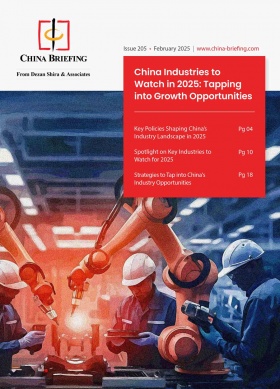
China’s Industries to Watch in 2026
China’s industries mark a pivotal shift in 2026 as the 15th Five‑Year Plan redirects economic policy from growth acceleration toward capability‑building and technological self‑reliance. Rather than a cyclical rebound, the new policy cycle emphasizes industrial consolidation, innovation, and market discipline across priority sectors. For foreign companies, success will depend on strategic alignment with policy objectives, deeper localization, and compliance readiness.
2026 marks the first year of China’s 15th Five-Year Plan (2026–2030), representing a structural inflection point in the country’s economic trajectory rather than a cyclical rebound. The Chinese government is moving decisively away from short-term, stimulus-driven growth toward a model centered on capability-building and high-quality development, with innovation and industrial upgrading at its core.
The operating environment will likely feature slower headline growth and sharper divergence across sectors, as policy prioritizes competitiveness, self-reliance, and market discipline.
For foreign businesses, 2026 is less about chasing cyclical recovery and more about reassessing positioning. Understanding where policy support is being consolidated and where market pressures are likely to intensify will be critical for navigating China’s industrial landscape.
Policy backdrop: China’s industrial strategy entering the 15th Five-Year Plan

China’s industrial policy outlook for 2026 is defined by continuity rather than disruption. The first year of the 15th Five-Year Plan signals evolution, not a policy reset. Officials have framed the plan as a “crucial link” toward China’s 2035 modernization goals, designed for a more fragmented and uncertain global environment. As such, the Chinese government is not launching sweeping new initiatives but consolidating earlier programs, such as Made in China 2025, while sharpening its focus through a stronger security and resilience lens.
Several features will shape the 2026 policy environment in ways that are directly relevant for foreign businesses.
- Priority shifts toward “future industries” with clearer commercial logic: Regulators have elevated a defined group of “future industries” and “emerging pillar industries” as long-term growth engines. These include semiconductors, advanced displays, new materials, aerospace, the low-altitude economy (such as drones), and biopharmaceuticals. Compared with earlier plans, the emphasis has shifted from rapid scale-up to building self-sustaining ecosystems, integrating R&D, manufacturing, standards, and talent into coherent industry clusters
- From capacity expansion to standards, consolidation, and execution: After years of aggressive investment, policymakers are increasingly shifting focus from rapid capacity expansion toward quality control, standard-setting, and more efficient execution, while continuing to support strategic sectors. National standards and certification regimes (particularly in areas such as AI, smart manufacturing, advanced equipment, and related emerging industries) are being used to guide industry development, improve technological coherence, and reduce fragmentation, rather than to signal a withdrawal from strategic support.
- Industrial policy increasingly intersects with security and global influence: Industrial upgrading is now tightly linked to national security and China’s ambitions in global economic governance. Self-reliance in critical technologies (such as semiconductors, AI, and aerospace) is framed explicitly as a security objective. Coordination among agencies, including the Ministry of Industry and Information Technology (MIIT), the National Development and Reform Commission (NDRC), and security regulators, is intensifying, particularly around supply chain control, data governance, and technology standards.
- A more complex regulatory landscape for foreign companies: MIIT will remain the central driver of industrial policy execution in 2026, following its late-2025 conference outlining priorities such as manufacturing stabilization, digital transformation, and “AI + industry” integration. The NDRC will continue to steer cross-sector coordination, investment discipline, and regional industrial planning, while sectoral regulators issue detailed rules under the broad 15th Five-Year Plan framework. For multinational companies, this translates into a more layered compliance environment: understanding national plans is no longer sufficient without close attention to sector-specific standards, security reviews, and localization requirements.
China’s key industries to watch in 2026
Advanced semiconductors and computing infrastructure
If one industry underpins all others in China’s strategy, it is semiconductors. Chips are rightly called the “foundation” of modern industrial systems, and the Chinese government considers mastery of semiconductors critical for economic security and tech leadership. In 2026, China’s semiconductor push will zero in on a few focus areas:
- Logic chips at mature nodes: With advanced (sub-7nm) chips constrained by US export controls, China is intensifying efforts on mature-node logic chips (28nm, 14nm processes and above), which are widely used in automobiles, IoT devices, and industrial electronics. Chinese foundries have expanded capacity here and are aiming for self-sufficiency in the 28nm generation in the near term. The rationale is to secure the supply of workhorse chips for the economy, even if cutting-edge chips remain a challenge. At the same time, China will continue trial production of 7nm processes (as reportedly achieved by SMIC) but in low volumes, using equipment stockpiled before sanctions. The overall strategy is resilience: meet domestic demand for mainstream chips to reduce reliance on imports, while methodically chipping away at the technological gap in high-end logic.
- Advanced packaging and materials: Unable to easily acquire the latest extreme lithography tools, China is investing heavily in semiconductor packaging technologies (like chiplet architectures, 2.5D/3D stacking) to boost performance by innovative assembly of less-advanced chips. State-backed labs and firms are working on new packaging substrates, chip-stack integration, and advanced materials (photoresists, silicon carbide, gallium-based materials) to strengthen the upstream supply chain. The government has identified semiconductor materials as a key weakness and is supporting domestic companies in areas from wafers to specialty gases.
- Domestic computing infrastructure, data centers, and cloud: Beyond chip fabrication, China is building out the computing infrastructure that runs on those chips. The Eastern Data, Western Computing project (moving data center workloads to inland regions) is being expanded, and new government guidelines require that any state-funded new data center must predominantly use domestically made chips. This is driving demand for homegrown server processors (like those from Huawei, Phytium, and Loongson) and networking gear. China is essentially creating a parallel computing stack: domestic CPUs, domestic operating systems, and cloud services (such as Alibaba Cloud, Huawei Cloud) that reduce reliance on foreign tech.
Takeaways for foreign businesses
For foreign technology and semiconductor firms, this trajectory presents mixed implications. Competitive pressure will intensify in mature-node equipment, components, and materials, where Chinese suppliers (supported by subsidies and guaranteed demand) are increasingly viable substitutes.
At the same time, structural dependencies remain in areas such as EDA software, advanced materials, and specialized manufacturing know-how, preserving selective openings for foreign participation. Market access is likely to hinge less on pure exports and more on localized engagement models, including joint ventures, licensing arrangements, and onshore R&D collaboration. Foreign players that can align with China’s localization objectives while protecting core intellectual property will be best positioned to remain relevant in the ecosystem.
AI as an industrial layer, not a standalone sector
China’s AI sector is entering a more mature phase in 2026, shifting away from a consumer-led boom toward deeper integration with the real economy. After several years of rapid experimentation in consumer-facing applications (such as chatbots and entertainment platforms), policy attention and investment are now pivoting toward enterprise and industrial use cases.
In official policy discourse, AI is increasingly framed not as a standalone industry but as a general-purpose technology designed to enhance productivity, efficiency, and decision-making across sectors.
Key trends in this pivot include:
- AI integration with core industries: Alongside traditional robotics, embodied AI (where AI algorithms are integrated into physical systems such as robots, drones, autonomous vehicles, and smart equipment) continues to gain policy and industry attention. At the same time, AI agents are increasingly emerging as a cross-cutting layer, enabling autonomous perception, planning, and execution within both physical and digital systems. China is leveraging its strengths in hardware manufacturing and industrial data to advance intelligent industrial robots, service robots, AI-enabled medical devices, and autonomous systems capable of operating in complex, real-world environments. Notably, the MIIT has identified “AI + Manufacturing” as a key 2026 priority.
- Development of embodied AI and robotics: “Embodied AI” (AI algorithms integrated into physical devices like robots, drones, autonomous vehicles) is a growing priority. China is leveraging its strength in hardware manufacturing to advance intelligent industrial robots, service robots, medical devices, and autonomous systems capable of operating in complex, real-world settings. Developments in collaborative robots for factories, AI-enabled medical equipment, and smart retail systems are expected to gain traction in 2026.
Implications for foreign firms
For foreign companies, this environment presents both opportunities and constraints. Demand for industrial and enterprise AI solutions remains strong, but market entry increasingly depends on localization. Foreign AI providers may be required to store data onshore, adapt models to Chinese datasets, and submit algorithms for regulatory review.
At the same time, China is accelerating its standards agenda, with dozens of national AI standards expected to guide areas such as model reliability, transparency, and interoperability by 2026.
For firms willing to adapt their deployment and compliance strategies, China’s shift toward industrial AI opens a more stable (if more regulated) path to participation in the world’s largest applied AI market.
NEVs: From growth story to restructuring phase
By 2026, China’s NEV sector will shift from rapid expansion to consolidation and efficiency-driven competition. Price wars in 2024–25 severely compressed margins, with average net profit per EV falling to around RMB 5,000 (US$700) by late 2025. Domestic demand is plateauing, and industry analysts expect overall auto sales to stagnate or contract in 2026, pushing weaker players toward exit.
- Consolidation is accelerating: China once had more than 150 EV manufacturers; estimates suggest only 10–15 brands will be profitable long term. Around 40–50 loss-making players face restructuring or closure by 2026. The government has signaled acceptance of market-driven exits, and EVs were notably excluded from the 15th Five-Year Plan’s list of strategic industries, confirming policy normalization.
- Overcapacity is the structural pressure point: Total vehicle production capacity is estimated at about 50 million units, versus about 33 million units of output in 2025, implying utilization of roughly 65 percent. Factory rationalization and cost control will be unavoidable in 2026.
- Overseas expansion is now essential: China became the world’s largest auto exporter in 2025, with EV exports exceeding US$48 billion in the first nine months alone. Passenger EV exports are forecast to grow in the low double digits in 2026, potentially reaching around 3.3 million units, or nearly one-third of China-made vehicles. Overseas sales can generate three to four times higher margins than domestic sales, making them critical for profitability.
What foreign companies should watch:
- Partnership risk-reward: consolidation creates opportunities, but only with top-tier OEMs; weaker JVs face exit risk.
- Third-market competition: Chinese EVs will intensify pressure in Europe, Southeast Asia, and emerging markets.
- Localization requirements: components, software, data, and charging standards increasingly require China-specific solutions.
All in all, China’s EV market is no longer a growth play. It is a scale, efficiency, and global competition story, and only the strongest players will remain.
Aerospace and the low-altitude economy
China’s ambitions are quite literally sky-high in the aerospace realm. By 2026, the country is broadening its focus from traditional civil aviation to a comprehensive “low-altitude economy” encompassing drones, urban air mobility, and near-space industries. This sector illustrates China’s pattern of combining top-down state programs (like commercial aircraft development) with bottom-up tech innovation (like the drone industry boom).
Core developments to watch include, among others:
- Civil and commercial aerospace: China’s domestically produced C919 narrow-body jet is now in commercial service, with deliveries accelerating through 2026, consolidating COMAC’s position in the domestic market. Government support remains strong across aircraft engines, avionics, satellites, and launch infrastructure. Commercial space activity is also expanding, with private firms active in small satellite manufacturing and launch services, under close state oversight.
- Low-altitude economy scaling up: The low-altitude economy (civil airspace below roughly 1,000–4,000 meters) is being opened for commercial use. Pilot zones in cities such as Shenzhen, Shanghai, Chengdu, and Shijiazhuang allow drone logistics, industrial inspection, and emergency services. Shenzhen alone operates hundreds of drone cargo routes. The Civil Aviation Administration of China estimates the low-altitude economy could exceed RMB 3.5 trillion (US$502.23) by 2035, explaining its elevation to a national priority.
- Industrial and public-sector drones: Drones are now mainstream in agriculture, energy inspection, logistics, public safety, and urban services. Passenger-carrying eVTOL trials are underway, supported by local governments.
- Regulatory tightening with growth support: Revised aviation rules will take effect in July 2026, requiring drone design, manufacturing, and operations to obtain CAAC certification, alongside mandatory electronic identification. This formalizes market access while improving safety and traceability.
Opportunities and constraints for foreign participation
Foreign participation in China’s aerospace and low-altitude economy remains possible but increasingly selective. Technology collaboration continues to carry transfer sensitivities. In traditional aerospace (aircraft, satellites, avionics)foreign firms often face pressure to localize production or share know-how in exchange for market access, while export controls in home jurisdictions add another constraint. As China’s capabilities mature, system-level imports are likely to shrink, but gaps remain in areas such as aircraft engines, advanced avionics, composites, and specialized software. In addition:
- Certification and standards are a critical gatekeeper: All aerospace products require CAAC approval in China, while Chinese platforms seeking overseas sales must secure FAA or EASA certification. Given China’s scale, it is likely to influence global standards in areas such as drone traffic management. Early engagement in Chinese standards bodies and pilot zones can materially improve market access.
- Component-level participation is the most viable entry point: Foreign firms are more likely to succeed by supplying subsystems, materials, sensors, or control software than by supplying complete aircraft or drone systems, where domestic champions dominate.
- Geopolitical risk remains high: Aerospace is strategically sensitive, requiring strict export-control compliance, end-user due diligence, and contingency planning.
Biomedicine and healthcare innovation
Amid a broader economic slowdown, one sector where China is not pulling back is biomedicine and healthcare. If anything, the urgency to advance healthcare innovation has intensified – driven by an aging population, COVID-era lessons, and a desire for self-sufficiency in life sciences. In 2026, biomedicine remains a priority area, with government policy pushing for faster development of new drugs, high-end medical devices, and integrated digital health solutions.
Key focus areas and developments include:
- Innovative drugs, faster pathways, and growing output: China is pushing to shift from a generics-heavy model toward original drug discovery. Regulatory reforms have materially reduced development timelines: under the National Medical Products Administration (NMPA) pilot system, clinical trial application reviews have been shortened from 60 to 30 working days, and priority review pathways are now routinely applied to oncology, rare disease, and urgently needed therapies. By 2024, China ranked second globally in the number of clinical trials initiated, accounting for roughly 25 percent of global trial volume. In 2026, more domestically developed biologics, including CAR-T therapies, antibody–drug conjugates, and novel monoclonal antibodies, are expected to reach late-stage trials or approval.
- Medical devices: Medical device policy continues to balance innovation with affordability. The NMPA’s Ten Measures for Medical Device Innovation prioritize AI diagnostics, surgical robotics, high-end imaging, and advanced implants. At the same time, China’s lifecycle management reforms now allow simultaneous global submissions and reduce duplicative testing for many imported devices, lowering time-to-market. However, centralized volume-based procurement remains a powerful price-cutting tool: past rounds have driven average price reductions of 50–70 percent for selected devices. As a result, foreign firms are likely to find greater defensibility at the high end of the market, where technological differentiation remains strong, while mid-tier products face rapid commoditization.
- Digital health and real-world integration: China is also advancing system-level healthcare digitization. By 2025, more than 3,000 “internet hospitals” were operating nationwide, supporting online consultations, e-prescriptions, and insurance-linked payments. AI-assisted diagnostics are increasingly deployed in public hospitals, while pilots in Hainan and the Greater Bay Area allow early patient access to cutting-edge therapies, generating regulatory-grade evidence. This “living lab” approach shortens time-to-market and lowers development risk for both domestic and foreign innovators.
Strategic implications for foreign healthcare companies
- R&D localization is becoming essential: Foreign pharmaceutical and biotech firms are increasingly expected to embed R&D activities in China to remain competitive. Including China in global clinical trials (or running parallel local trials) helps secure earlier regulatory approval under China’s streamlined pathways and aligns with government priorities around knowledge transfer.
- Market access requires pricing realism: While regulatory approval has accelerated, commercial access hinges on reimbursement and procurement mechanisms. Inclusion in the National Reimbursement Drug List often involves substantial price concessions in exchange for volume, compressing margins. Medical devices face similar pressure through volume-based procurement. Foreign firms may need to segment their China strategies, focusing on premium or first-in-class products initially, adapting pricing models, or localizing manufacturing to remain competitive in cost-sensitive segments.
- Compliance and data governance are non-negotiable: Health data localization requirements affect clinical trials and digital health solutions, with approvals required for cross-border data transfers.
Conclusion: Strategic takeaways for China’s businesses planning in 2026
2026 will be a year of positioning rather than immediate payoff in China. As the first year of the 15th Five-Year Plan, it sets the direction for how industries will be shaped, funded, and regulated over the remainder of the decade. For foreign businesses, success will depend less on speed or scale and more on alignment.
Companies should anchor their China strategies to policy priorities, particularly in areas where their products or services support upgrading, efficiency, sustainability, or technological capability. At the same time, strategies must reflect market maturity: some sectors are entering consolidation, while others remain early-stage and ecosystem-driven. Geographic and regional differences within China will further shape opportunity.
China’s global footprint also matters. As Chinese firms expand abroad, competition will increasingly play out in third markets, making supply chain resilience, market diversification, and selective partnerships more important.
Above all, firms should approach 2026 with realistic expectations. Building local capability, relationships, and compliance foundations now will be critical to capturing more durable opportunities later in the plan cycle. In China’s next industrial phase, alignment and execution will matter more than ambition alone.
As one of Asia’s leading business setup consultants, we help companies structure entities to meet strategic goals and maximize operational efficiency, including cross-border asset transfers, M&A transactions, and corporate relocations. To arrange a consultation, please contact China@dezshira.com.
About Us
China Briefing is one of five regional Asia Briefing publications. It is supported by Dezan Shira & Associates, a pan-Asia, multi-disciplinary professional services firm that assists foreign investors throughout Asia, including through offices in Beijing, Tianjin, Dalian, Qingdao, Shanghai, Hangzhou, Ningbo, Suzhou, Guangzhou, Haikou, Zhongshan, Shenzhen, and Hong Kong in China. Dezan Shira & Associates also maintains offices or has alliance partners assisting foreign investors in Vietnam, Indonesia, Singapore, India, Malaysia, Mongolia, Dubai (UAE), Japan, South Korea, Nepal, The Philippines, Sri Lanka, Thailand, Italy, Germany, Bangladesh, Australia, United States, and United Kingdom and Ireland.
For a complimentary subscription to China Briefing’s content products, please click here. For support with establishing a business in China or for assistance in analyzing and entering markets, please contact the firm at china@dezshira.com or visit our website at www.dezshira.com.
- Previous Article Scegli il modello di distribuzione più adeguato al tuo ingresso nel mercato cinese
- Next Article