Other Briefings
China commodities exports to slow as domestic economy warms, imports to increase
China developing quietly as worlds largest commodities trading center
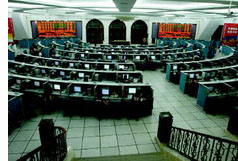 Mar. 25 – Amidst the on-going rhetoric about China’s trade imbalances, a little understood, but significant revolution is underway – the massive emergence of China as the worlds largest commodities trading center.
Global commodities markets have seen prices of goods such as basic fuels, grains and metals increase dramatically over the past two years, however the emergence of China’s internal markets as a force to be reckoned with is going to have a significant impact on industries from foreign banking to commodities trading to global suppliers and processors.
Futures Exchanges booming as China seeks pricing stability
Chinese domestic trading is on the increase as long positioning internal trade barriers are being brought down – the days of provincial governments levying taxes on goods transiting their borders from other provinces are finally drawing to a close. Oil, steel and aluminum from the power belts and heavy industrialized northeast are driving production of grains, coffee, tea, tobacco and sugar from the south, which in turn sell these products on, in the form of cigarettes and other processed foods to the wealthy stretch of China’s east coast and elsewhere within across the nation.
Likewise, the South also provides the North with wheat and edible oils for the massive brewing industry concentrated in North China in addition to its medicinal and pharmaceutical industries. In essence, China will retain far more of what it produces to service its domestic market, and will export less. Anti-dumping measures meted out by the United States and the EU are also driving China to develop its domestic consumption more, and this has a significant impact on financing and the need to introduce a better system of price stability.
Shanghai may have been upstaged by the LME in steel futures trading recently, but it is unlikely to make the same mistake again. Commodities futures are already traded on the Dalian Commodity Exchange including soybean, soy meal, corn, and linear low density polyethene (LLDPE), the first petrochemical futures in the country. The Dalian exchange is the county’s oldest such futures board, and ranks second only to the Chicago Board of Trade in volume of corn futures. According to statistics released by the exchange, Dalian turned over 371 million contracts for US$167 trillion last year, a 54 percent increase from 2006. Zhengzhou’s Commodity Exchange, which trades wheat and pulses, is also booming.
Foreign banks seeking market access
The foreign banks, meanwhile, want in. Chinese companies trading in these markets require RMB currency trading facilities, as well as RMB borrowing facilities, pre-export and pre-payment financing, warehousing and inventory financing to service the domestic demand. Such banks however may well need joint venture partners to help them with the comfort factors of assessing risk when dealing with Chinese businesses in an environment they may be unfamiliar with. Who are they selling to? Who are the end buyers? Are they on long term contracts? Are they reliable? Does the supply chain risk stand up to scrutiny? Certainly banks and finance houses will need to have access to experienced credit check personnel before entering the market, however the potential is huge. Far better, perhaps to hedge some of that risk with a Chinese banking partner better able to assess risk and collect on debt.
Chinese banks dominate this sector at present. Partially driven by the state’s direction of financing, both in order to develop the domestic market and also to keep some inefficient yet powerful SOEs in business, the Bank of China, the Industrial and Commercial Bank of China and Agricultural Bank of China have been handing out large amounts of financing at low rates of interest to Chinese businesses, mopping up about 80 percent of the total market in financing the trading of these commodities.
How this plays out in terms of the Chinese regulatory evolution, ability to collect on default, the international transactions of Chinese commodities exchanges overseas, and the emergence of foreign banks with the true ability to finance part of China’s domestic trade will be interesting to see. However, the next boom in China is commodities trade in its domestic markets, and a long term one it is likely to be.
- Previous Article BASF plans US$900 million expansion project in Nanjing
- Next Article Does China Have India’s Built-in Resilience Over U.S. Downturn Concerns?