Other Briefings
Why Chinese managers make better economic sense than expatriate ones
Fundamental dynamics in understanding RMB purchasing power is key
April 28 – Jack Perkowski of Asimco fame has been in the press a lot recently, not least because of the launch of his new book “Managing The Dragon : How I’m Building a Billion-Dollar Business in China.”
We caught up with him at the YPO event in Beijing last week where he was one of the guest speakers. In his presentation, he told of how he came to China, and began to build his company. In doing so, he made an interesting observation about staffing a business in China. Taking from his pocket a US$100 bill and a RMB100 bill, he then considered the similarities:
* Both are the highest value note in their respective countries
* Both feature previous national leaders on their front
* Both employ similar anti-forging technology with ultraviolet lights, a metal strip and dual colored inks.
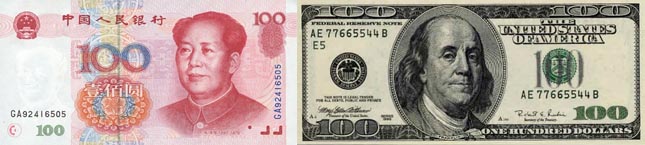
Yet, as he pointed out, Americans by and large do not feel US$100 is a lot of money. But Chinese view RMB100 as a lot of money, despite the fact that at current exchange rates, the RMB100 is worth just US$14.
Jack then went on to tell of various stories concerning executives from the United States visiting China. In one of his factory locations, in a small town about four hours drive out of Shanghai, the local government has built a hotel. Jack and his executives stay there when visiting. Apparently, it’s perfectly acceptable, clean, and warm, with a good local restaurant. After checking out, the bill for the night came to RMB240 (US$34).
Upon seeing the bill, the visiting businessman said “Now I understand why China can manufacture goods so cheaply! There is no way a hotel in the U.S. could survive on such low rates.” But Jack went further. “Actually, that is the most expensive hotel in town. My Chinese managers would not dream of staying there. They are far more prudent and would stay somewhere else, at rates of RMB80 a night. The hotel we stayed at was three times the local going rate.”
Jack then continued the story at a meeting he had with Tsinghua University alumni – arguably Beijing’s finest and most prestigious university. In meetings with now very successful Chinese businessmen, he asked them all how much they paid for a haircut. One of them was a multi millionaire with businesses in China and the US. “I paid RMB30” he said – and looked shamefaced about it. Everyone else laughed – he had paid far too much! The average price of a haircut, in that room, full of wealthy Chinese businessmen – was RMB10 – just over one dollar (Jack, being from Wall Street, confessed to a US$50 haircut).
Jack’s message was clear. China, and the Chinese, have a fundamentally different sense of perspective over value and costs than we do in the West. The differences in balance of trade issues, the declining rate of the dollar, all are side shows compared to the reality – the Chinese value the RMB. Americans value the dollar, and feel the RMB is inexpensive. It’s that constant notion that makes Western managers in China not generally so able as their Chinese ones, who do appreciate and understand exactly what the RMB can buy and how to get it. A Western manager will pay at least three times the local rate, perhaps more, and will still assume he’s getting a good deal. But in China, amongst the Chinese, they can buy far lower. Hence, Chinese competitiveness in the global and domestic markets. It’s not going to stop either.
Jack Perkowski employs about 2,500 people. Out of those, about 12 are expatriates. That is a key to conducting business in China – using the Chinese economic dynamics. In China, RMB100 is considered the same wealth as US$100. The perspective is different – and to truly compete, foreign investors must grasp this economic fundamental.
- Previous Article China Invests in Kyrgyzstan for Central Asia Leadership
- Next Article Central China Expo promotes inbound investment