Other Briefings
Kashgar to Become Central Asian Trading Hub, Again
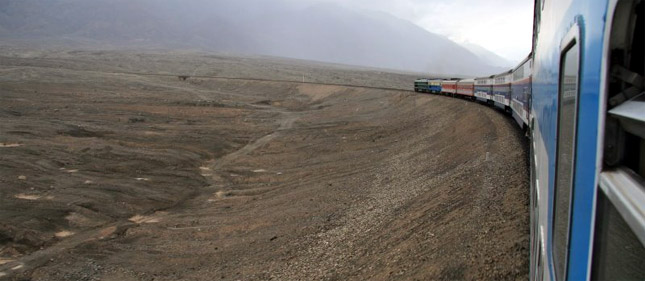
Sept. 11 – Kashgar, the ancient Southern Silk Road trading town in China’s far West, is the subject of feasibility studies to extend the Chinese rail system south and west to link up with rail networks in Pakistan and Bishkek, the capital of Kyrgyzstan. Sited on the Western edge of the Taklimakan desert, and sandwiched between the huge Tian Shan and Pamir mountain ranges, Kashgar already hosts the largest outdoor market in the world – every Sunday, when over 150,000 Central Asian traders descend on the city to deal in everything from Camels and Yaks to silk carpets and rare medicinal plants.
Kashgar’s history dates back over 2,000 years, and during this time it has always been a trading center, seeing Chinese goods heading into Central Asia and vice versa. Geographically strategic, it is situated at the junction of routes from the Oxus valley, as well as old trade routes arriving from Khokand, Samarkand, Almaty, Aksu, Khotan and Gilgit in Pakistan. Kashgar has been noted from very early times as a political and commercial centre. An oasis town, it is also where both the northern and southern silk road routes from China around the Taklimakan Desert converge. It is also almost directly north of Taxkorgan, through which traffic passed from the ancient Buddhist kingdom of Gandhara in what is now Pakistan, and Jalalabad in eastern Afghanistan. Taxkorgan remains the entry/exit point for travelers and trucks traveling between the two countries. About 200 kilometers west of Kashgar, just past the present border with Kyrgyzstan, the main Silk Road route crossed into the head of the Alai Valley from where relatively easy routes led southwest to Balkh or northwest to Ferghana. The present main road now travels northwest through the Torugut Pass and onto Bishkek.
Both the routes to Pakistan and to Bishkek are currently supported by bus connections. However, as travelers that have experienced the famous Karokoram Highway will know, the mountains are highly unstable and prone to landslides. The highway has several full time teams of construction workers along its length at all times making repairs. It is also a dangerous route with steep drops and frequent accidents.
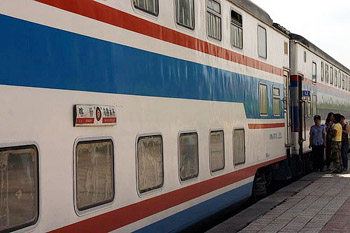 However, the central government has announced feasibility studies to look at the possibility of extending the Kashgar rail spur (it is already the westernmost rail station in China) south into Pakistan and west to Bishkek. Pakistan has already announced plans to extend its current railway network in Peshawar to Gilgit, while Bishkek is already on the Kyrgyz network with regular trains to other regional capitals such as Almaty (Kazakhstan), which is already linked to Urumqi, and onto Moscow.
Should the proposals prove workable, implementing them will link Kashgar directly to rail networks and markets across Pakistan, across the huge expanse and cities of Central Asia and onto Iran, and would immediately boost the towns trade and prosperity. The technology required to engineer such routes however, especially the southern spur to Gilgit, is daunting. These are some of the most spectacular and highest mountain ranges in the world, not to mention incredibly difficult to secure, much of the rock is subject to permafrost and is composed of easy to crack shale composites. However, having completed the Xining-Lhasa railway under equally difficult conditions, Chinese engineers are now world leaders at building feasible railways in high altitude and difficult mountainous conditions.
The proposals to develop the region, often beset by ethnic and religious conflicts, fit with the Chinese government’s plans to offset regional poverty by increasing wealth. As Islamic fundamentalists tend to exploit poverty in order to win converts to their cause, China—which faces such challenges on its Western borders and especially in the Kashgar region—is increasingly working with its regional neighbors. The common perception is that overseeing the re-establishment and redevelopment of centuries old trade routes is key to the creation of regional security, and peace through trade, across Central Asia.
Kashgar meanwhile has already cemented its desire to re-establish itself as a Central Asian hub and provide more than a weekly market for sheep and donkeys – it has taken the lead amongst Central Asian cities and is now host to the Central Asian Trade Fair each June, which is the equivalent of Guangzhou Trade Fair, but highlights instead of pan China goods, commodities, buyers and sellers from across Central Asia. Readers interested in selling onto Islamic and Central Asian markets should check the fair out.
Related reading
China’s Borders: A series of articles looking at China complicated relationships with its closest neighbors
2point6billion.com: Our emerging Asia website
- Previous Article China Bans Coal-to-Oil Projects
- Next Article China and Pakistan’s Enduring Alliance