Other Briefings
Recognizing China’s Amorality: A Box that Needs to be Checked
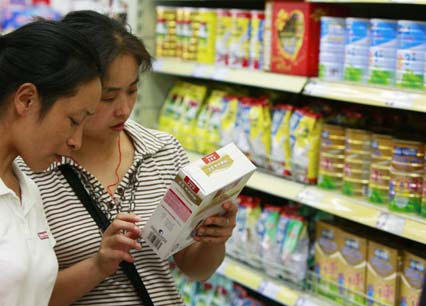 Sept. 26 – The recent scandal over tainted milk products in China has raised much commentary and opinion in the media, mainly related to the pointing of fingers and assessing who is to blame. Yet it actually highlights a deeper problem in China’s society that could be even more damaging.
First though, to recap on the chain of events, the New Zealand-based Fonterra dairy business operates a joint venture with the Shijiazhuang-based Sanlu business, with Fonterra as minority partners. Contaminants were discovered in various batches of baby milk powder, specifically melamine, an ingredient that makes the formula appear to be richer in proteins than it actually is. It can, accordingly, also be used to adulterate low quality, or even ‘bad’ milk. As it causes serious medical side effects in infants—stomach problems, malnourishment and even kidney stones in 3-6 month old babies—the use of melamine for such purposes is illegal.
That didn’t prevent the product being inserted with seemingly great ease into the Chinese milk supply chain (much of which is sourced and processed in Inner Mongolia) and finding its way initially into baby formula but then, alarmingly into other milk products as well.
The situation has gotten so bad that Starbucks in Hong Kong have now stopped selling coffee with dairy milk and is substituting soy milk instead.
Upon discovering the problem, Fonterra requested that Sanlu recall all products. Sanlu’s management however, being in the majority position, declined to do so. With Fonterra unable to influence a decision that was rapidly becoming worse, following a month of not getting anywhere with either their own board of directors in Sanlu nor the regional Chinese government official, Fonterra then requested the intervention of the New Zealand prime minister’s office to intervene on their behalf.
New Zealand Prime Minister Helen Clark did just that, and stepped over the normal protocol of dealing with the regional Chinese officials and informed the Chinese central government of the impending disaster that was about to unfold. Beijing acted immediately and ordered Sanlu to recall their products. But by then, contaminated products had been in the supply chain for nearly six weeks. To date, four infants have died, with the WHO warning of more. An estimated twenty thousand more have required hospital treatment. The effects of the contamination, and the true extent of it, in what appears to have been a huge and long running deliberate introduction of melamine onto China’s dairy supply chain, has still not been accurately assessed.
While much commentary has focused on the fragility of the JV legal structure, and Fonterra’s inability to get their own business partners in Sanlu to act has been discussed, the deeper implication however is an essential lack of morality within Chinese society. With China being an atheist state, religion is strictly controlled. There is no religious education in Chinese schools, a situation completely at odds with most of the rest of the world. The impact of this has been to create a society largely amoral, ignorant of the differences between right and wrong.
The reason why religious education in schools is important is that much of it, regardless of the actual creed, focuses on the recognition between good and evil, and on how to deal with the temptations of life. China does not have such a system in place.
This has also been compounded by the recent creed as laid down by the Communist Party, and from Deng Xiaoping in particular, stating “to get rich is glorious,” thereby practically authorizing the making of money with no thought for the consequences.
This is now a major societal problem that China, and the world, is faced with addressing.
Evil, or wrongdoing, can be expressed as a willing desire to carry out a particular act, even when in the knowledge that it is wrong. Chinese society however does not even have this in place.
I find it hard to believe the Chinese executives at Sanlu, when faced with the request to recall their defective products deliberately set out to hospitalize or kill Chinese babies. Yet their actions, in not recalling product, and those also of the local government officials who failed to act, demonstrate a deep rooted inability to determine between right and wrong. They were amoral.
The consequences for businesspeople investing in China therefore are significant. Not only is there the maze of legal and regulatory requirements to go through, an added risk is the potential amorality of the Chinese and their inability to decide what to do in the event of a major problem.
Of course, not all Chinese are amoral. However, as has been sadly demonstrated in the Sanlu / Fonterra case, a lack of due diligence on Sanlu’s Chinese executives as to their actual moral integrity lead to a disaster both for the businesses and to the children who died or became ill.
Determining the morality, or lack of it, amongst potential Chinese business executives responsible for making difficult decisions may soon become a required part of a foreign investors arsenal of minimizing risk when it comes to the Chinese market. It is certainly now a box that needs to be checked and ticked off if such scandals are not to be repeated again and again over the years.
- Previous Article As Growth Slows, China to Start Second Economic Census
- Next Article China’s National Holiday, Offices Closed Until October 6