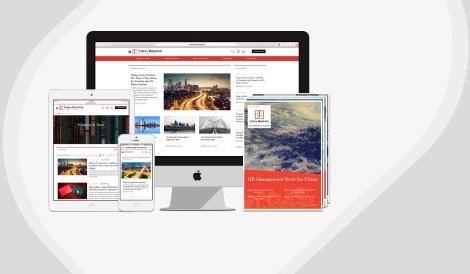
Written in China and read by professionals
in over 160 countries worldwide


China Briefing is a monthly magazine and daily news service about doing business in China. We cover topics relating to the Chinese economy, the market in China, foreign direct investment and Chinese law and tax. It is written in-house by the foreign investment professionals at Dezan Shira & Associates


Getting Cash Money RMB Out of China

Op-Ed Commentary: Chris Devonshire-Ellis

Nov. 11 – An issue that frequently crops up at this time of year is the question of getting earned income out of China. As many expatriates look to leave to go home for Christmas, those piles of RMB that have been stacking up nicely begin to look mouth-watering in terms of repatriating the readies. But here comes a catch – for expatriates legitimately employed in China, and paying tax here, there is not a problem. But for those working in China’s grey economy – there is. Let me explain.

China employs strict currency regulations that are designed to prevent large amounts of currency moving out of the country. Your small amount may not seem like a huge deal, but if everyone moved out a few thousand dollars, it would impact upon China’s economy. The movement of illicit cash both into and out of China is known as “hot money” and it can seriously damage a country’s financial stability if not regulated. China controls and monitors the amounts of money coming into and out of the country through a mechanism known as SAFE – The State Administration of Foreign Exchange. In order to legitimately take money out of China (typically wire transfer), an application needs to be made to SAFE (your bank would normally assist with this procedure) with proof of income taxes paid in China, and details of the overseas bank account the funds are to be wired to. The onus is on the applicant therefore to demonstrate the money was legitimately earned and taxes have been paid on it. If so, the money is permitted to be repatriated and there is no daily or annual ceiling limiting the amount an individual can transfer. This should not be a problem for expatriates in China with proper working contracts, visas and tax registrations.

However, many expats in China fall into a different category. Either by design or default (Chinese employers sometimes take advantage and do not fully explain this issue), there are expatriates in China who are not properly registered with the authorities, are not paying taxes, and who have nonetheless acquired a bundle of RMB. Here, there is a problem. Firstly, such individuals cannot meet the SAFE requirements, and this becomes a block. Chinese banks will not allow you to exchange and wire overseas any amount over the RMB equivalent of US$500 for you without SAFE approval, and if there is no tax paid receipts (employers should provide this) or no work permit or visa, this route is barred.

It should be noted, though, that foreign nationals can transfer any amount under or equal to the equivalent of US$500 once per day without providing proof that the money was legitimately earned or that taxes have been paid on it. Chinese nationals are able to transfer the equivalent of US$2,000 per day into a foreign bank account, however Chinese nationals face a US$50,000 annual ceiling when exchanging RMB into foreign currencies while foreign nationals do not face such restrictions.

Under these circumstances, the only practical ways to solve this are as follows:

  1. If you thought your employer has misled you over your status, you may have a case. In which case, you’ll need to find a local friendly lawyer to assist. However this may take time to resolve.
  2. China does permit the traveling outside of China with up to RMB20,000 or equivalent. You may pack up to this amount and be safe (any more and you face confiscation of all the money if caught). The problem with this is that RMB is not freely exchangeable, and it may be hard to convert it when back home. Hong Kong does provide such facilities – although be warned – the exchange rate issue will be a killer.
  3. If more than RMB20,000, you may divide the total up among friends to limit the amount each carries. But make sure they’re good friends!
  4. If you have a Chinese friend that you trust, you can transfer the money to their Chinese bank account and they can wire a maximum of US$2,000 per day to your overseas bank account. You can also do this yourself, but foreign nationals are limited to US$500 per day.
  5. If you intend to return to China, deposit the money into a bank and withdraw up to the legal amount each time you leave.
  6. Convert your RMB into a saleable asset that you can convert to cash back home. China does limit the amount of goods value being exported from the country, but are less likely to question personal belongings. Buying and shipping items from a reputable Chinese fine art dealer may be a solution.
  7. Next time, be aware that working in China without paying tax is illegal. It can impact on even realizing the money earned. If in doubt, get a friendly lawyer to look at your employment contract terms and ensure that hard won income can be readily – and legally – repatriated.

In terms of item (6), I can relate a recent anecdote. Admiring a hugely expensive diamond necklace in a Chinese jewelry store recently, I enquired about who was going to be lucky enough to wear it. The carefully worded reply was “Oh Sir! This necklace will never be worn.”

Dezan Shira & Associates can review employment contracts and provide advice on their legalities and impact on expatriate employees. Please contact the practice at legal@dezshira.com, or visit the firm’s web site at www.dezshira.com.

Related Reading

Doing Business in China
Our 156-page definitive guide to the fastest growing economy in the world, providing a thorough and in-depth analysis of China, its history, key demographics and overviews of the major cities, provinces and autonomous regions highlighting business opportunities and infrastructure in place in each region. A comprehensive guide to investing in China is also included with information on FDI trends, business establishment procedures, economic zone information, and labor and tax considerations. Priced at US$40 (PDF)

China-Tax-Guide-2013-thmbThe China Tax Guide: Tax, Accounting and Audit (Sixth Edition)
This edition of the China Tax Guide, updated for 2013, offers a comprehensive overview of the major taxes foreign investors are likely to encounter when establishing or operating a business in China, as well as other tax-relevant obligations. This concise, detailed, yet pragmatic guide is ideal for CFOs, compliance officers and heads of accounting who need to be able to navigate the complex tax and accounting landscape in China in order to effectively manage and strategically plan their China operations.

Expatriate Income Tax Planning

Expatriate Income Tax Reporting

This entry was posted in Business, Finance, Tax and Accounting and tagged , , , , , , , , . Bookmark the permalink.

36 Responses to Getting Cash Money RMB Out of China

  1. Eddy says:

    Note: the USD 50k/year is both for Chinese as foreign nationals. What I do is to change the RMB to Euros and take it cash in my suitcase to Europe. The tax bureau knows I work in China for the past 7 years, and they even send me a letter that I dont need to declare taxes anymore in Holland. So if they open the suitcase and discover the cash, its easily explained that its from the job in China; no pobmens there.
    I advice not to take too much at a time, e.g. Euro 10.000 / flight and deposit it in your home-bank. If you want to exchange e.g. RMB in the value of USD 200k, just take 3 friends or 3 of your employees to the bank and you can easily x it into Euro or USD!

  2. Ah Suei Yeo Christensen says:

    My husband works in China and very often I travel here to visit him. I have a personal account with a local bank, for the convenience of having travelling money. Why Chinese government impose a USD50K p.a. ceiling for transfers into the account?

  3. @Eddy – You’re taking a risk – the maximum amount of cash you;re allowed to take either in or out of China is the equivalent of slightly less than USD3,000; anymore than that and you’re caught, you face having it confiscated as well as potentially being fined.

    @Ah Suei Yeo Christensen – China has currency movement restrictions in place, and as there are a lot of Chinese, the impact of overseas relatives bringing money in and out can disrupt the economy. It’s known as ‘hot money’ and is considered an unreliable assets as it can be injected into and withdrawn from China at any time. Hence the restrictions. I agree, with relatives in China living to a certain standard (I have an elderly Grandmother living here, she needs more than USD50k per annum in living expenses) it is a nuisance. But this figure is high enough not to affect most Chinese nationals. Thanks – Chris

  4. Sarah says:

    I have a proper contract and can show that I have paid the appropriate taxes. How much foreign currency am I allowed to carry out of China and what paperwork do I need to complete?

  5. Phil says:

    Can you help please?

    I am a foreigner living, working (legally), and paying taxes in China. I am employed by a Singapore Company, and seconded to our strategic partner in China. My company cannot pay me in RMB, and can only pay me in a Foreign Currency (USD or AUD). They have no problems in sending foreign currency into my Citibank Account, but I am restricted to changing USD50K per year. I plan to live here for the next 10 years, buy a car, and buy a house.

    I am told that I will need to apply to SAFE to get permission to exchange any additional USD to RMB, but I cannot find what documents are needed and what the process is? Can you please guide me to these English Regulations or a Guide?

    Also, if I keep USD in my Citibank account in China, when I eventually leave will I be able to transfer these funds to another country in USD?

    Thanks for your help.

  6. @Phil – you have numerous issues here, not least an underlying China tax situation in addition to the repatriation matters you raise. You need specific advice – can you please email us at china@dezshira.com stating where you are in China and our pertinent regional office will be in touch. Thanks – Chris

  7. Phil says:

    Chris,
    Many thanks. I sent an e-mail, but am still waiting to hear back from your people. I am based in Tianjin. Can you give me the contact for someone I can speak to here – that speaks good English?

    Thanks

  8. Jim says:

    Hi. Interesting comments. Our situation is a bit different. As a foreignor based in China, my expense reports are reimbursed in rmb into my Bank of China account. I now find out that the expense reimbursments can not be transferred out of China because it is not salary and it is not taxed. The bank dosen’t know what to make of it and I’m stuck with a great deal of money in the bank that I need to transfer to NY. What to do??

  9. Eric says:

    How about precious metals? I see the banks selling gold and silver bullion — I assume this stuff is legit? I also assume you’ll pay some kind of premium so it may be a death of a thousand cuts… Anyone have any experience with this?

  10. chakri says:

    i am studing in china i am having internet banking account ican do it.

  11. Roger says:

    You need to transfer it to a Chinese friend to transfer abroad, its so quick and easy
    Filling in all the papers is just too mafan

  12. Transferring precious metals and so on – if you get caught, you’ll have it confiscated. Be careful with these ideas. – Chris
    Phil : Tianjin@dezshira.com

  13. Fantastic ideas…I like the idea of purchasing gold/silver bullion. Better than converting it to USD, haha.

  14. Russ says:

    Chris,

    Thanks very much for this informative article. I am planning to purchase a house in Kenya with taxed income RMB I have earned in China.

    Is getting money back into the country also relatively easy?

    Also, do you know any further details about SAFE?

    Cheers,

    Russ

  15. Hi Russ, Provided you have paid tax in China on your income (I assume this is salary) then there is no problem in getting it out of China, although there are procedures with SAFE to follow. In terms of Kenya, you’d need to ask a local tax / investment professional there about inbound investment into that country. We do have a partner firm in Nairobi, let me know if you need their contect or assistance with SAFE procedures. You can email me directly: chris@dezshira.com.
    Best wishes
    Chris

  16. arn says:

    i use to transfer to philippines when encounter large amount, because its so hassle to transfer in small amount and have to do many times also they have limit in china. and i always have someone to arrange for me when large amount. and only have to paid small fee. but atleast safe.

  17. joni avery says:

    I am having tremendous problems trying to get legitimately earned salary out of China
    I foolishly have let it build up (like the balance of 2 years salary) because I have not experienced this problem when repatriating my salary before. The school I work for has said it has paid the tax – but the tax certificates now reside at the education department and cannot be accessed. The bank will not accept this – or the letters from the school stating this, plus my all my official documentations that I currently work for the school etc. I’ve and others are spending so much time doing whatever the bank wants – but after a week of this running around I am totally frustrated. Arn you mention an agent who can assist for a fee. Can you give more details please.

  18. S.SRIDHAR says:

    I am indian and would like to visit china for a 8 days business Visit. I am first time traveling to abroad.. how to exchange my indian money to china money. I have to book the ticket as I got visa today only.I have to move with in another 3 to 4 days from india.Let me know the procedure, how to exchange my money and procedure of return back the remaining money while coming back from tour. how much money i can take while going to china.

  19. @Joni: You should have been given your own copy of the tax paid receipt in your name by the school – where is it? You should ask for this, it is their legal duty to give it to you. If they haven’t, or won’t, I suspect they are messing you about and possibly did not pay your tax or contribitions. In which case, you’ll need to take further action.
    @Sridhar, You can exchange money at any Chinese bank although I recommend you bring USD rather than Rupees. Yoir ATM card will also work in China. If you change at the bank they will give youa receipt, keep this and if you don’t spend it all when you leave give them the receipt and they’ll return your money in the original currency. – Chris

  20. Lee Nelson says:

    Hi all, help please would be very greatful. My gf is in china at the moment and tried to take 10k in cash out of china. She got stopped at the customs and took to the local police station. She has now been allows out and they have given her 1k back. She has to wait for the appeal to go through. Does anyone please know how long this takes as I was hoping to get her back fri christmas.

    Thanks Nelson

  21. Paul says:

    In 2002 I sent some money to my girlfriend working in HK to put in a gold mine mutual fund. The small sum has turned into a 7 figure balance. She is returning to HK in February to bring back 400k to Canada. After reading about the problems bringing cash out of China I wonder how best for her to get the invested amount back to Canada. Can you please advise me how best to do this?

  22. Bob J says:

    I was under the impression (even from one of your previous articles I believe) that one could take 20k RMB AND US$5k in cash for each overseas trip. Is this not the case?

    B.

  23. @Paul: Hong Kong has free movement of currency, and your/her bank should be able to arrange this.

    @Bob J: Yes you can take out RMB20,000 AND up to USD5,000 (or equivalent) in foreign currency: http://www.iatatravelcentre.com/CN-China-customs-currency-airport-tax-regulations-details.htm

    Best wishes
    Chris

  24. Marco says:

    I have more than 5000USD legally earned money which I want to take out of China. I know I have to declare that in the airport. Do you know if it is enough for the customs declaration if I bring them certificates of salary and taxation in China?

  25. Armina says:

    Hi Chris,
    I have worked for five years in a organisation engaged in bilateral cooperation with the Chinese government. I was employed on a local consultancy contract and was issued a foreign expert certificate plus a working visa (did not hold any diplomatic nor service passport).The MoU between the two governments stipulated that foreign employees should not be paying individual income tax in China, thus my colleagues and I never did. In the beginning we made enquries to the local Chinese tax bureau but no-one seemed to have a straight answer. In addition, out of five years, for three years I had been paying the individual income tax back to my own government in the EU. My salary was in EUR currency transferred from my Embassy’s bank account in China (and sometimes HK) to my Chinese bank account.
    I have saved the earnings as long-term deposit in China. Now I am considering to repatriate the EUR savings back to the EU.
    Will I be allowed to transfer this amount of EUR considering the above tax situation? Will the SAFE ask me for tax payment proof? If so can a copy of the MOU be used as proof? How about the proofs of the taxes already paid to my own government?
    Thank you.

  26. @Marco – You may have issues at the airport. Why not transfer it out using a bank? It’s far easier than carrying wads of USD bills about, and safer. And yes, if you have all the tax paid certificates its not a problem;
    @Armina – You need professional advice to look into this, it is unclear what you mean by an “MOU” and yes, I can well imagine the China tax authorities and banks not understanding this either. I think you need to contact us at tax@dezshira.com to sort this out.
    Best wishes – Chris

  27. ricky says:

    Hi,

    I am a foreigner ,I have brought home in china .
    if in future i will sale my home ..how to transfer those few million Rmb from china to hongkong.
    any sugestion ,ofcourse by legal ways.

  28. @Ricky – there is no capital gains tax in China – yet. I suggest discussing the matter with our Hong Kong office – hongkong@dezshira.com to work out getting the proceeds from the sale of the property in China back to Hong Kong in the most efficient manner. Please email to hongkong@dezshira.com for advise on the subject.
    Best regards;
    Chris

  29. Andy says:

    Hi,

    I’m english, live work pay tax etc all in uk, I married a Chinese girl whose chinese national parents want to send her the funds for a house approx 200k gbp, what’s the best method for them to use?

  30. @Andy – China operates a closed capital account and limits the flows of RMB out of the country. Your inlaws need to talk to an international banker in China, someone like HSBC or StanChart. However it is not easy as China severely limits the amounts that can leave the country. I’m sorry but I do not expect to see a solution to this any time soon. But maybe the bankers can assist. It’s really not our field of expertise. – Chris

  31. Reza says:

    Hi i live in Taiwan as a foreigner,
    Ii came back from Beijing and bring back some RMB (the amount is RMB 10,000+ ). I want to exchange it to NTD and deposit it in my Bank account in Standard Chartered Taiwan. When I went to Standard Chartered branch in Taipei this afternoon, they said i can’t exchange it to NTD unless i can provide an evidence that i bought RMB from Taiwan. This is the problem, the RMB I have is originally from China and they cannot accept it.

    I know that RMB is “restricted currency” but i didn’t know this is going to be a problem once I’m in Taiwan. Before, i intended to transfer the money from my bank account in Beijing to Standard Chartered in Taiwan but the transferring is failed for unknown reason. Because I don’t plan to go back to China anymore, i just withdrew all the money inside and hoped i can deposit it in Taiwan.

  32. @Reza. I suggest next time you use a bank in China to transfer it for you. They do provide such services. Carrying large amounts of cash about in suitaces across borders is always a bad idea, and you should have checked the Taiwanese regulations concerning RMB before you travelled. It’s your money – be more responsible next time.
    I guess you’ll have to find some Taiwanese businessman who reguarly travels to China to exchange it for you. – Chris

  33. Christina says:

    Hi Chris,

    I am currently trying to transfer 300k GBP out of China, in order to make an investment into the UK stock market.

    What would be the best solution to transfer money out? (In a very short time)
    If necessary, I can try to set up an account in HK. So, will that solve the problem?

    Thanks.

  34. @Christina: No, I’m afraid that won’t solve the problem. Banks in China and Hong Kong have institutional barriers between them and you will need to show you paid tax on that money before you can transfer it out, even to Hong Kong. You need to talk with your bank in China over the admin procedures required to do so. – Chris

  35. Roger says:

    Hi Chris,

    would there be issues to repatriate money from funds originating from property sales in China, if I couldn’t prove that the funds used during the original purchase of the property were properly taxed in the first place?

    Thanks for the info and cheers,

    Roger

  36. @Roger – That’s a tricky one. Yes, you could face issues. You’ll need help with this, please email to tax@dezshira.com for assistance, we can have someone look at the matter for you and advise on your position (and what to do about it).
    Best wishes
    Chris

Leave a Reply

Your email address will not be published. Required fields are marked *

You may use these HTML tags and attributes: <a href="" title=""> <abbr title=""> <acronym title=""> <b> <blockquote cite=""> <cite> <code> <del datetime=""> <em> <i> <q cite=""> <strike> <strong>


Dezan Shira & Associates


The Asia Briefing Bookstore

Our best selling legal, financial, tax and regional guides to Asia business, industry reports and more…
Click here to view all titles now

China Briefing Book Store China Briefing Book Store China Briefing Book Store China Briefing Book Store China Briefing Book Store China Briefing Book Store China Briefing Book Store China Briefing Book Store China Briefing Book Store

NOW AVAILABLE IN PDF