China Briefing - The Practical Application of China Business
India Briefing Vietnam briefing www.2point6billion.com
 
Username Password
Remember Me
Forgot Username
or Password?

Archive for the ‘East China’ Category

Service industry on the rise in Yangtze River Delta

Wednesday, April 30th, 2008

By Jean-Charles Briand, Noemie Lanes and Anna Sellger

SHANGHAI, April 30 - To understand how China’s economy is evolving, just look at the Yangtze River Delta. With 30 percent of the country’s private sector, this populous and wealthy region including Shanghai, Jiangsu and Zhejiang provinces has relied heavily on its secondary market for growth. But that’s changing as more and more foreign direct investment pours into tertiary businesses focused on finance, wholesale and retail, information technology and real estate. The result is a rising service sector that many believe is China’s next step toward developing a modern economy.

Industrial strengths
With China’s most developed private sector, the delta now accounts for roughly 20 percent of the national GDP, its own total reaching some RMB4,775.4 billion two years ago. Jiangsu contributed most to the region’s GDP, about 45 percent, while Zhejiang and Shanghai represented about 33 percent and 22 percent, respectively. After Shanghai the most economically vibrant cities were, in descending order by economic size, Suzhou, Hangzhou, Wuxi, Ningbo and Nanjing. (more…)

Improving infrastructure keeps Yangtze River Delta vibrant

Friday, April 18th, 2008

By Jean-Charles Briand and Anna Sellger 

April 18 - Perhaps no other region has played so vital a role in China’s growth as the Yangtze River Delta. Home to Shanghai, Jiangsu and Zhejian provinces, the delta has become the country’s commercial core, accounting for roughly 20 percent of GDP and nearly half of all foreign direct investment, according to Xinhua News Agency. As part of our series focusing on China’s hotspots, we look closely at the YRD and the infrastructure that keeps its economy humming, from the harbors and airports that provide gateways to the outside world to the roads and railways crisscrossing its interior. What emerges is a picture of mixed development that has created benefits—and challenges—for the region.

Harbors and airports
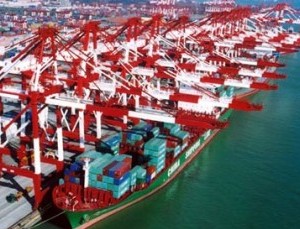
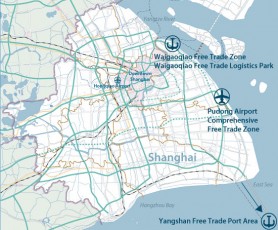
Among the toughest challenges has been implementing a unified plan for the region’s harbors. While Shanghai is still the delta’s major destination point for cargo ships, its rapid growth has brought about opportunities for neighboring cities looking to support their own ports. As a result, some cities now compete almost as much as they cooperate with the region’s megalopolis. Ningbo, for example, is expanding berths at its harbor – considered the nation’s best natural deepwater port – even as Shanghai finishes work on a new deepwater port of its own at Yangshan Island. (more…)

Dezan Shira & Associates opens new office in Ningbo

Wednesday, April 16th, 2008

Practice now has three offices in Shanghai’s Yangtze River Delta and nine nationally

NINGBO, April 16 - Dezan Shira & Associates, the specialist foreign direct investment firm, has opened an office in the port of Ningbo, on China’s Eastern coast just south of Shanghai.

The practice, which provides legal, tax and due diligence advice to multinationals throughout China, Hong Kong, India and Vietnam, has maintained a large regional office in Shanghai for 14 years and a year ago established a branch in Hangzhou, the capital city of Zhejiang province and situated between Shanghai and Ningbo.

“Business in Shanghai is becoming highly competitive and many companies are more price sensitive than was previously the case,” says Olaf Griese, the firm’s regional manager. “As Shanghai moves more towards becoming a center for services, cities such as Ningbo are developing rapidly and are a major draw to foreign manufacturing investors looking at accessing Shanghai’s wealth yet without the higher cost.” (more…)

China’s largest wine importer freed from custody over customs discrepancies

Monday, April 14th, 2008

SHANGHAI, April 14 - Don St. Pierre Jr., named the 37th most influential wine person globally, was recently released in Shanghai following a month-long detention and a major investigation of his firm’s wine importation business.

St. Pierre was being held as part of an extensive investigation of wine importers by the Chinese authorities looking for evidence that importers had been understating the value of wines they bring into the country in order to evade high customs duties in the growing Chinese wine market.

St. Pierre Jr., the company’s managing partner, and ASC vice president Carrie Xuan had been held in a customs department building, though neither was officially under arrest.

“The way the system works here is that they detain you while figuring out what to do,” said his father Don St. Pierre Sr. to the industry publication Wine Spectator. St. Pierre Sr., who has been doing business in China for 20 years, founded the company a decade ago with his son and currently serves as chairman. “There are 27 boxes of documents that have to be matched up with other pieces of paper to show that customs duty has been paid,” he said last week, prior to his son’s release. ”They have been going through them for three weeks now and found there is nothing wrong.” (more…)

Shanghai’s new terminal opens in Pudong, but where are the passengers?

Thursday, April 10th, 2008


SHANGHAI, April 10 – The second terminal at Shanghai’s Pudong International Airport opened on March 26, more than doubling capacity for the airport to 60 million passengers and year.

Built at a cost of RMB20 billion, the new terminal and third runway, designed to handle the world’s largest aircraft, opens just in time to handle the expected surge of passenger volume from the upcoming Olympic Games and 2010 World Expo.

Current passenger traffic however, remains distinctly low. Arriving at the new terminal, one finds nothing more than vast emptiness. Even with passengers pouring out of two 747s, the anticipated chaos is nowhere to be found, with staff efficiently clearing immigration queues in the shortest amount of time. (more…)

China increases output target of largest domestic oilfield

Monday, March 24th, 2008

By Andy Scott

Mar. 24 - China’s largest oilfield, Daqing, increased its setimated output target to 40 million tons annually in the coming decade.

The Daqing oilfield produced 41.7 million tones of oil in 2007, slightly above the target of 41.62 million tons Xinhua reported.

The oilfield’s change in output target is related to China’s rising thirst for oil. In 2007 alone, the country imported 163.17 million tons of oil, a 47 percent increase from the mid-nineties according to the National Bureau of Statistics. At current rates of growth in consumption, China will need to import about two-thirds of its total oil requirement by 2015.

The Chinese government, which has long viewed dependency on foreign oil as a strategic weakness, is quite concerned about its declining domestic production of fossil fuel energy. It has actively sought to better exploit its current domestic resources and encourage oil and mineral exploration in its territory. PetroChina’s announcement last year of the discovery of the Bohai Bay oil field that could reach 10 million tons a year by 2010 could not have come at a better time for the oil thirsty country. (more…)

Official: Shanghai port to see 10 percent growth in TEUs

Monday, March 24th, 2008


SHANGHAI, Mar. 24 - The container throughput of Shanghai’s seaport is expected to see stable growth of about 10 percent a year until 2010, said a port administration official at the China Ports Future Forum in Shanghai on Friday.

This projected growth is attributed to the booming economy in the Yangtze River Delta and preparations for the 2010 Shanghai World Expo said the director-general of the municipal port administration, Xu Peixin.

According to Xu, “high value-added port services will be the key focus, supported by the government’s investment and financial policies” for future development of the port.

According to statistics published by China Daily, container throughput at the port rose to 560 million tons last year, up 4.2 percent from 2006. Last year Shanghai’s cargo shipments increased by 26.15 million TEUs, moving it passed Hong Kong as the world’s second-largest container seaport after Singapore.

Xu said forward-looking policy measures for the port will include a more diversified investment strategy to enhance its competitive edge.

Shanghai port trade up 20 percent

Monday, March 17th, 2008


SHANGHAI, Mar. 17 - Foreign trade in East China’s Shanghai port rose 20.3 percent year-on-year to US$91.06 billion in the first two months of 2008, according to Customs statistics.

The figure accounted for 24.9 percent of the country’s total trade value of US$365.93 billion from January to February.

Exports climbed 17.2 percent, 20.7 percentage points lower than the period from a year earlier, to US$58.59 billion. Mechanical and electronics products accounted for around 60 percent of total exports.

Imports jumped 26.3 percent to US$32.47 billion,10.8 percentage points higher from the same period last year Shanghai Customs said. (more…)

Shanghai-Nanjing high-speed rail link approved

Tuesday, February 26th, 2008


SHANGHAI, Feb. 26 - The National Development and Reform Commission approved a plan to build a high-speed rail passenger rail link between Shanghai and Nanjing.

The US$5.52 billion line will take four years to complete and shorten travel time on the 300 kilometer route from two hours to 72 minutes Xinhua reported. Once completed, trains will run 24 hours a day at intervals of three minutes during peak hours. (more…)

Power Chaos As More Snow Hits Central, Eastern & Southern China

Monday, February 4th, 2008

happykk_1289.jpg
Chinese New Year passenger travel discouraged in favor of energy supplies – more heavy snowfalls forecast 

February 4th  - China continues to have problems with its worst winter weather for 50 years as further heavy snow hit already stressed cities and towns in much of the country. With the military already deployed and tanks on the roads in some areas to assist with snow and debris clearance, power shortages threaten anew as raw materials such as coal and coke have been delayed in getting to power plants. Rail rolling stock has been diverted away from the normal passenger transit duties as this time of year, with Chinese New Year’s eve just 36 hours away, in order to allow reasonable chances of the power supply being maintained. Up to 60% of all passengers are now expected to stay put rather than travel back to their homes, effectively missing Chinese New Year celebrations with their families. A record number of over 42,000 rail container trucks laden with coal and coke were transported just today (Monday) alone to ensure national power supplies could be maintained – over 25% more than the norm at this time of year. Both army and civilian maintenance crews were also working around the clock to repair broken or damaged power lines in Guangdong, Guizhou and Henan Provinces, where millions of people have been without power for over a week.

Several energy intensive metal producing plants have also been ordered to shut down to conserve fuel, with the aluminum and steel industries worst hit, a situation reflected in the world’s trading bourse, the London Metal Exchange, where futures contracts have shown sharp increases in value and the daily trading rate have shot up by more than 10% in the past few days for these commodities as shortages loom. The supply chain knock-on effect has also led to several auto manufacturers in China to either close or reduce capacity as sheet metals are not reaching their production lines. Nissan, Honda, Toyota, Ford and Mazda have all closed some or all of their plants.   (more…)