
 Other Briefings
Reporting Obligations of Foreign Enterprises in Vietnam: 2026 Compliance Calendar
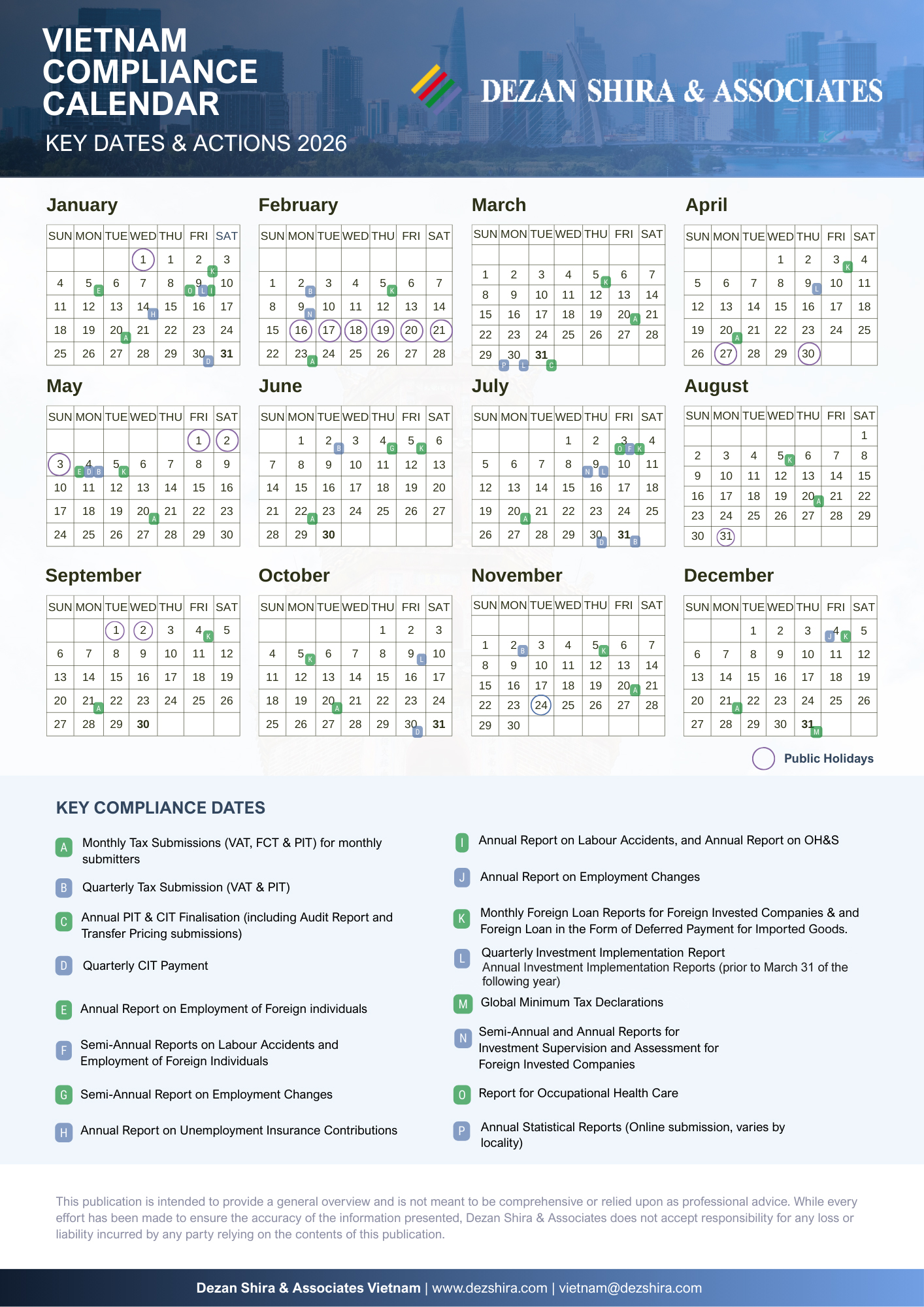
April 2026 presents a relatively moderate compliance workload for foreign-invested enterprises (FIEs) in Vietnam, though several important reporting obligations still require close attention.

Compared to more intensive periods such as March and May, April offers a narrower set of filing requirements, primarily focused on monthly tax declarations, foreign loan reporting, and investment implementation updates.
Nevertheless, businesses should not underestimate the importance of these obligations, particularly as authorities continue to strengthen digital reporting systems and enforcement practices. Timely and accurate submissions remain essential to maintaining compliance and avoiding administrative penalties.
Reporting obligations in April 2026
Monthly foreign loan reports for FIEs – April 3
Foreign loan reporting obligations apply to enterprises with offshore borrowing arrangements, including deferred payment structures tied to import contracts.
As per Circular 12/2022/TT-NHNN, FIEs must submit monthly reports on the status of short-, medium-, and long-term foreign loans via the State Bank of Vietnam (SBV) online portal. These reports enable regulators to monitor foreign borrowing and repayment activities.
Key highlights:
- Deadline: No later than the 5th day of the following month
- Submission: Online via the SBV portal. If technical problems arise, the company can submit a written report to the SBV, using the form in Appendix 05 of Circular 12/2022
- Penalties apply for late or inaccurate reporting
Monthly tax submissions (VAT, FCT, and PIT) – April 20
Monthly tax declarations remain a core compliance obligation for FIEs with a monthly filing status. Enterprises must declare and pay value-added tax (VAT), foreign contractor tax (FCT), and personal income tax (PIT) withheld from employees.
Key highlights:
- Applies to companies registered for monthly tax filing
- Covers indirect taxes and payroll-related obligations
- Requires reconciliation with accounting records and invoices
- Increasing integration with Vietnam’s e-tax and e-invoice systems
Quarterly and annual investment implementation report – April 9
These reports are submitted to investment authorities and statistical offices. FIEs must report on project implementation, including capital contribution, operational progress, labor usage, and financial performance.
Key highlights:
- Submitted to the Department of Planning and Investment (DPI)
- Annual report deadline: Before March 31 of the following year
- Quarterly reports may also be required depending on project scope
April will be the final window for late or adjusted investment implementation reports, due by April 9. During this time, authorities may seek clarifications or request additional documents. Delays in submission could impact project compliance status and licensing.
What FIEs need to prepare for May 2026
In May, FIEs are also obliged to submit monthly reports including:
- Monthly foreign loan reports for FIEs – May 5; and
- Monthly tax submissions (VAT, FCT, and PIT) – May 20.
Additionally, FIEs should take note of the following key obligations, all due by May 4:
- Annual report on the employment of foreign workers;
- Quarterly corporate income tax (CIT) payment (for Q1 2026); and
- Quarterly tax declarations (VAT and PIT, where applicable under the quarterly filing regime).
Enterprises are advised to review their reporting schedules carefully to ensure compliance, particularly where overlapping monthly and quarterly obligations apply.
Key compliance takeaways for FIEs
April represents a relatively lighter compliance period for FIEs in Vietnam, offering an opportunity for businesses to ensure accuracy and consistency across routine filings, particularly in foreign loan reporting, tax declarations, and investment implementation reports.
At the same time, FIEs should begin preparing early for May, which brings a more concentrated set of obligations, including quarterly tax filings, corporate income tax payments, and annual reporting on foreign employees. Proactive planning, such as reviewing payroll data, finalizing tax calculations, and aligning internal documentation, will help enterprises manage the heavier compliance workload in May and avoid last-minute bottlenecks.
This article first appeared on Vietnam Briefing, our sister platform.

