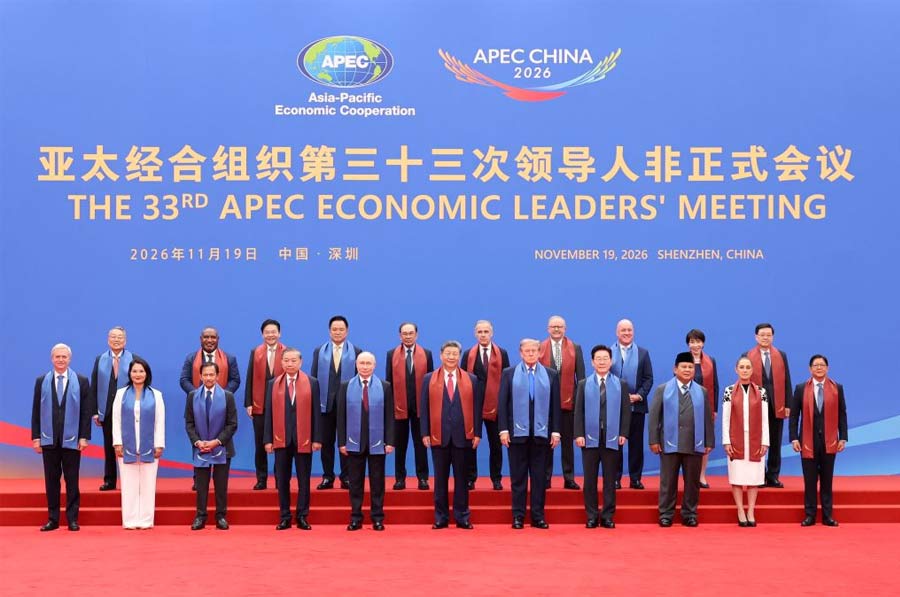
- The 33rd Asia-Pacific Economic Cooperation (APEC) Economic Leaders’ Meeting closed in Shenzhen on 19 November 2026 with the 2026 APEC Leaders’ Shenzhen Outlook, which commits APEC’s 21 member economies to work on resilient supply chains, trade digitalisation, and artificial intelligence (AI).
- On the sidelines, Chinese President Xi Jinping and US President Donald Trump agreed to draft an action plan for US-China “strategic stability”. Despite positive diplomatic signals, no tariff relief was announced. The key issue for businesses remains whether the US-China trade truce, due to expire on 10 January 2027, will be extended.
- Canada, Chile, and the Philippines also struck trade deals during the summit week. We explain what was agreed and what businesses should watch next.
What happened at APEC 2026 in Shenzhen?
Leaders of APEC’s 21 member economies met in Shenzhen on 18–19 November 2026, in China’s first APEC host year in 12 years and the first summit held in the city.
The week opened with the APEC CEO Summit on 17–18 November at the Qianhai International Convention Center, which drew more than 2,000 business and political representatives. Executives from 115 Fortune Global 500 companies were expected to attend, with US firms the largest foreign group.
Xi Jinping chaired the leaders’ meeting on 19 November. The same afternoon, he held a bilateral meeting with Donald Trump, followed by the first three-way meeting between the leaders of China, the US, and Russia. The three leaders issued a four-point Peace Declaration in which they plan to increase the production and supply of refined petroleum products and reaffirm the importance of stable energy flows. However, the text gives no volumes or timelines, so its effect on fuel costs is not yet clear, especially while attacks on shipping in the Strait of Hormuz continue to weigh on oil markets.
Compare Markets Across the Asia-Pacific
Benchmark costs, free trade agreement alignment, and tariff considerations across markets before you invest or relocate.What does the 2026 APEC Leaders’ Shenzhen Outlook commit to?
The Shenzhen Outlook is a voluntary, non-binding statement built on four pillars: economy and trade, connectivity, innovation, and development. Leaders adopted it by consensus, together with three outcome documents on trade, connectivity, and innovation. Chinese official sources describe it as the 2026 APEC Leaders’ Declaration, which sets out the Shenzhen Outlook.
The table below lists the commitments in the official text of the Shenzhen Outlook that matter most to companies trading and investing in the Asia-Pacific.
|
Area |
What APEC leaders agreed in Shenzhen Outlook |
| Digital trade and customs | Welcomed the APEC Trade Digitalization Cooperation Framework (2027–2030), covering paperless trade, cross-border e-commerce, and the use of emerging technologies in trade |
| Regional integration | Advance economic integration in a “market-driven” way, including through the Free Trade Area of the Asia-Pacific (FTAAP) agenda; no timeline set |
| Supply chains | Keep supply chains resilient, “particularly for essential goods”, and keep trade corridors open, including for energy; welcomed the final review of the Supply Chain Connectivity Framework Action Plan (2022–2026) |
| Connectivity and business travel | Endorsed the APEC Connectivity Blueprint, with cooperation on quality infrastructure investment and the APEC Business Travel Card |
| Data and AI | Facilitate cross-border data flows while protecting data and privacy; endorsed a statement on harnessing digital and emerging technologies for employment |
| Energy and food security | Secure “uninterrupted, reliable, and affordable” access to energy, protect subsea cables and pipelines, and build resilient food supply chains |
| Small businesses | Improve access to capital, skills, and digital tools for micro, small, and medium-sized enterprises (MSMEs) |
However, unlike Xi Jinping’s speech at the CEO Summit, the Shenzhen Outlook does not mention the World Trade Organisation (WTO) or the multilateral trading system. Because APEC commitments are voluntary, their practical effect will depend on how each economy implements them, starting with the 2027–2030 digitalisation framework.
Xi Jinping’s opening-up pledges at the APEC CEO Summit
In his keynote speech at the APEC CEO Summit on 18 November, Xi Jinping said China would cut tariffs, expand market access, and “steadily expand opening up in the service sector”. He also pledged reforms of rules, regulation, and standards to ensure market access in manufacturing, more imports of quality goods and services, and a more stable and predictable environment for foreign investors.
At the leaders’ meeting the next day, Xi announced that China will contribute US$20 million to APEC practical cooperation and set up a Center for Asia-Pacific Community Studies in Shenzhen. China will also establish cooperation bodies on digital technology, cross-border data flow, clean energy, and small and medium-sized enterprise (SME) development.
Xi further called on APEC economies to work towards the FTAAP and to safeguard the WTO-centred multilateral trading system. Business leaders, meanwhile, released the APEC CEO Summit Shenzhen Initiative, the first outcome document in the summit’s 30-year history issued as an initiative. The summit’s outcomes include proposals on AI applications, zero-carbon transport, cross-border QR code payments, and green agriculture and supply chains.
However, Xi’s speech set out no new sector-specific measures or dates, so foreign investors should watch for implementing rules in the services and manufacturing sectors.
What did Trump and Xi agree at APEC 2026 in Shenzhen?
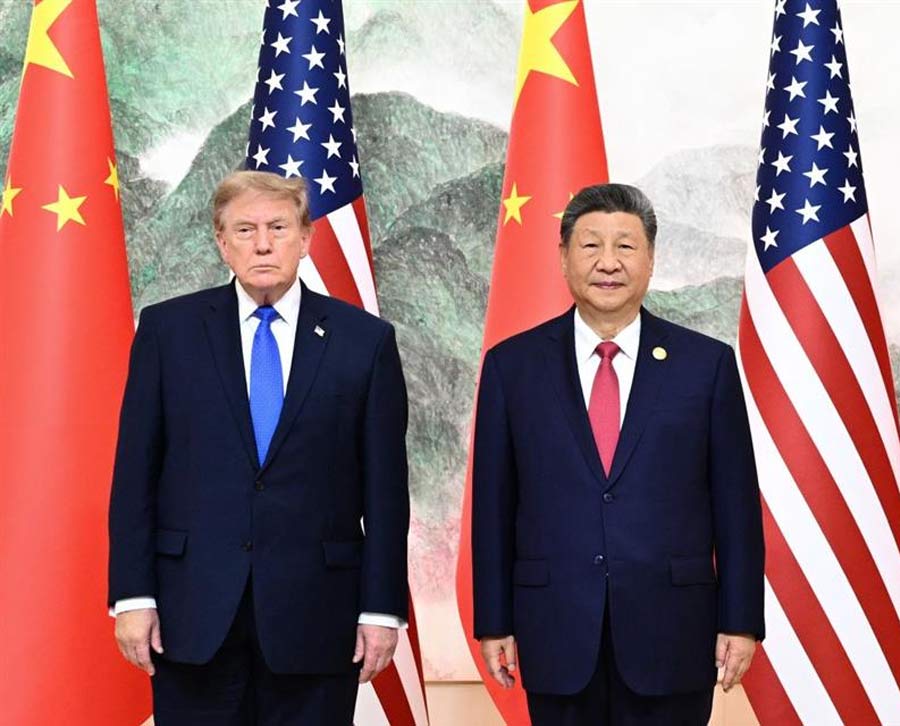
Xi Jinping and Donald Trump agreed to formulate an action plan for “a constructive China-U.S. relationship of strategic stability”, according to China’s Ministry of Foreign Affairs. The readout gives no timeline or content for the plan. Xi asked for a longer list of cooperation items and a shorter list of problems, while Trump proposed more cooperation on farm products, energy, and “super intelligence”.
In public remarks at APEC, Trump said he would ask China to do more for US farmers and that “a lot” of trade agreements would be signed soon. However, no new US-China deal was announced, and Trump said he would give a readout of the trip at a White House press conference on 20 November.
This was the leaders’ third meeting of 2026, after Trump’s visit to China in May and Xi’s state visit to the US in September. Trade has held up despite the tensions: US-China goods trade reached RMB 3.18 trillion (US$473.7 billion) in the first three quarters of 2026, and US investment in China rose 7.7 percent year on year.
Did the Trump-Xi meeting change US-China tariffs?
No. Neither side announced new tariff rates, and the truce agreed in Busan in October 2025 now runs to 10 January 2027. The table below summarises where the main US-China trade measures stand after the Shenzhen meeting, based on China Briefing’s US-China timeline and reporting on China’s 9 November extension.
|
US-China trade measure |
Status after the Shenzhen meeting |
| China’s additional 24% tariff on US goods | Suspended until 10 January 2027; China’s 10% tariff stays in place |
| China’s October 2025 rare earth export controls | Suspended until 10 January 2027 |
| China’s port fees on US-linked vessels | Suspended until 10 January 2027 |
| US export control Affiliates Rule | Suspended until 10 January 2027 |
| US Section 301 forced-labour tariff on Chinese goods | 12.5%, in force since 24 July 2026 |
| US tariffs under the International Emergency Economic Powers Act (IEEPA) | Struck down by the US Supreme Court on 20 February 2026 |
| Small businesses | Improve access to capital, skills, and digital tools for micro, small, and medium-sized enterprises (MSMEs) |
The main channel for tariff cuts is now the US-China Board of Trade, agreed in May 2026, under which each side is negotiating reciprocal tariff cuts on about US$30 billion of goods. US-China trade exceeds US$600 billion annually. US$30 billion therefore represents only a limited share of bilateral trade.
The Board held its first meeting by video on 13 November, which China’s Ministry of Commerce (MOFCOM) called “candid, in-depth and constructive”, but no agreement was announced. An agricultural working group under the Board is due to meet before the end of 2026.
Farm purchases remain the main US ask. In September, US Treasury Secretary Scott Bessent said China was meeting its commitment to buy 25 million tonnes of US soybeans but lagging on its pledge to buy US$17 billion of other farm goods a year.
Are chip export controls part of the US-China talks?
No. While tariff negotiations continue, technology restrictions remain on a separate policy track and may continue to tighten even if trade relations improve. US officials have said new chip export controls won’t negotiated with China during the APEC. On 16 November, the US Commerce Department introduced licence requirements for the most advanced AI chips going to companies in Singapore, Thailand, Malaysia, Indonesia, and Brazil. The rule aims to stop restricted computing power being accessed remotely through data centres in third countries. Companies that rent cloud computing capacity in Southeast Asia should check whether their providers are affected.
Which trade deals were signed on the sidelines of APEC 2026?
Several economies used the summit week to sign trade deals, even though the US-China talks produced no new tariff measures. The table below summarises the main agreements reported during the Shenzhen meetings.
|
Partners |
What was agreed in Shenzhen |
| China and Canada | China will give tariff estimated to reduce trade costs by approximately C$400 million, including on Canadian meat and seafood; Canada will extend remission measures for some Chinese steel and aluminium products by two years; the two sides will revive a bilateral currency swap |
| The Philippines and Chile | Signed a Comprehensive Economic Partnership Agreement (CEPA), the Philippines’ first free trade agreement with a Latin American country, giving Philippine exporters preferential access for 8,632 product categories |
| China and Chile | Signed an economic and trade roadmap and a memorandum of understanding on free trade and multilateralism |
Indonesia also said it would use the summit to start talks with China on a bilateral CEPA, although no launch had been confirmed at the time of writing. For companies sourcing from or selling into these markets, the deals may bring tariff changes on specific goods before any broader US-China agreement.
Shenzhen’s trade with APEC economies and the Greater Bay Area
Shenzhen is the Chinese Mainland’s largest trading city with APEC economies. Its imports and exports with other APEC economies reached RMB 3.23 trillion (US$481.1 billion) in the first three quarters of 2026, up 40 percent year on year, according to Shenzhen Customs. That was 13.4 percent of China’s trade with APEC economies, led by integrated circuits and computers.
The city’s total foreign trade reached RMB 5.25 trillion (US$782.0 billion) in the first ten months of 2026, making it the first city in the Chinese Mainland to pass RMB 5 trillion. Xi also proposed a World Association for Bay Areas Economic Cooperation, a sign that the Guangdong-Hong Kong-Macao Greater Bay Area will stay central to China’s opening-up agenda.
What should businesses watch after APEC 2026?
The next seven weeks will show whether the Shenzhen meeting leads to concrete trade changes. Businesses should watch:
- 20 November 2026: Trump’s White House press conference, which may add US details on the Shenzhen talks.
- 10 January 2027: The truce expiry date. Without an extension, China’s additional 24 percent tariff on US goods and its port fees on US-linked vessels would return.
- The Trump-Xi action plan: Whether it includes tariff, investment, or market-access measures.
- Board of Trade product lists: The final lists of about US$30 billion of goods each way, and when the tariff cuts take effect.
- Shenzhen Outlook implementation: Progress on the 2027–2030 digitalisation framework and the FTAAP under Vietnam, which hosts APEC in 2027.
- China’s opening-up rules: Implementing measures that follow Xi’s pledges on services and manufacturing access.
- Regional trade deals: When the China–Canada tariff relief and the Philippines–Chile CEPA take effect, and whether Indonesia and China formally launch CEPA talks.
Companies with US-China supply chains should plan for both a truce extension and a lapse, as tariff costs could change at short notice in January.
Note: US$ figures are converted at the People’s Bank of China central parity rate of US$1 = RMB 6.7132 on 17 November 2026. US$ figures are rounded and for reference only.